
Performance Medicine · Bonita Springs, Fl
Athletic Performance Optimization in Bonita Springs, FL
Physician-Supervised Hormone, Peptide, Recovery & Regenerative Protocols for Active Adults
The active adults who get the most from their training are the ones who optimize what happens between sessions — hormonal environment, tissue recovery, cellular energy, and injury resilience — not just what happens during them. Dr. Katherine Ortiz at DNA Wellness and Longevity Institute in Bonita Springs works with athletes and fitness-active adults to identify and address the physiological gaps that limit performance, slow recovery, and make training harder to sustain as the years accumulate.
Why patients choose us
FDA-Approved
All protocols designed and supervised by Dr. Katherine Ortiz, PA-C, Ph.D
Root-Cause Approach
Labs and evaluation first not a supplement stack or a guess
SW Florida
Serving Bonita Springs, Naples, Estero & Fort Myers


Who We Work With
The Active Adults Dr. Ortiz Optimizes
The athletic performance patient at DNA Wellness is not a 22-year-old elite athlete — it is the active adult in their 40s, 50s, or 60s who is serious about their training, frustrated that recovery is taking longer than it used to, noticing that body composition is harder to maintain despite consistent effort, or managing a musculoskeletal injury that is interfering with their ability to train at the level they want.
These are the golfers who play five days a week and feel joint fatigue and stiffness that didn't exist five years ago. The cyclists and runners who have seen their performance plateau despite consistent training volume. The CrossFit athletes who are recovering for three or four days between sessions when they used to bounce back in one. The recreational tennis or pickleball players managing a nagging tendon or shoulder issue that conventional treatment hasn't resolved. The active men in their 50s who are training hard but watching muscle mass decline and abdominal fat increase in ways that training alone doesn't correct.
What these patients share is that the limiting factor in their performance and recovery is frequently not their effort or their programming — it is the physiological environment in which their training is occurring. Declining testosterone, impaired growth hormone secretion, nutrient deficiencies, chronic tissue inflammation, or unresolved injury create a biological context where training produces less adaptation, recovery takes longer, and injury risk increases. Dr. Ortiz identifies which of these factors are present through comprehensive evaluation and addresses them with the clinical tools available at DNA Wellness.
The DNA Wellness Performance Men
What Physiological Optimization Produces
Better Recovery, Less Downtime
Recovery capacity — how quickly your body repairs muscle damage, clears inflammatory metabolites, and restores performance readiness — is primarily governed by hormonal environment, nutritional status, and tissue health. Optimized testosterone and growth hormone accelerate muscle protein synthesis. IV nutrient therapy replaces the micronutrients depleted by training. Peptides like TB-500 address musculoskeletal tissue repair at the biological level. MOTS-C improves mitochondrial efficiency so cellular energy is available faster between sessions. The cumulative effect is the ability to train at higher volume or intensity without the same recovery deficit — which is what separates athletes who improve consistently from those who plateau or accumulate injury.
Sustained Performance as You Age
The age-related decline in athletic performance — reduced strength, slower recovery, decreased aerobic capacity, increased injury susceptibility — is driven by measurable, addressable physiological changes: declining testosterone, impaired GH secretion, reduced mitochondrial efficiency, increased systemic inflammation, and progressive connective tissue changes. These are not inevitable consequences of aging that must simply be accepted — they are deficiencies that respond to appropriate clinical intervention. Men and women who maintain optimized hormonal environments, support cellular energy through interventions like MOTS-C, and address tissue injuries early rather than accumulating them, consistently outperform their chronological age across every measurable athletic metric.
Injury Resilience & Tissue Health
The musculoskeletal injuries that end athletic careers — or simply reduce the quality and frequency of training — are frequently the accumulated result of inadequate tissue repair between sessions rather than a single traumatic event. Tendons, ligaments, and cartilage have limited blood supply and slow natural healing; their resilience depends on the same growth factor environment that TRT and peptide therapy support. Addressing injuries early with PRP joint restoration or TB-500, rather than managing them with rest and NSAIDs that blunt the repair response, is the difference between an injury that resolves and one that becomes chronic. Dr. Ortiz approaches musculoskeletal injury in active adults with the same regenerative framework she applies to all tissue health — supporting the biological environment for repair rather than suppressing the symptoms.
Your Journey
What to Expect at DNA Wellness
Step 01 — Clinical Assessment & Candidacy Evaluation Your first appointment with Dr. Ortiz includes a thorough review of your joint pain history — location, duration, what makes it better or worse, prior treatments, imaging if available, and current medications. Candidacy matters: PRP works best for mild to moderate joint disease. Patients with severe bone-on-bone degeneration (Kellgren-Lawrence grade IV), severe thrombocytopenia, active joint infection, or certain platelet disorders may not be appropriate candidates. BMI, blood sugar control, and NSAID use also affect outcomes — Dr. Ortiz reviews all of these factors before recommending PRP, and will advise you to pause NSAIDs at least 1–2 weeks before treatment as they blunt the platelet response.
Step 02 — The PRP Procedure On the day of your procedure, a small amount of blood is drawn — typically 15–60ml depending on your protocol — and processed in an FDA-cleared centrifuge for approximately 10–15 minutes to concentrate the platelets. The PRP is then injected directly into the joint under clinical precision. The entire appointment takes approximately 45–60 minutes. Dr. Ortiz may use a series of injections depending on your joint and protocol — most patients receive 1–3 injections spaced 3–5 weeks apart for optimal loading. You will receive specific post-procedure instructions including activity guidance and what to expect in the first 48–72 hours.
Step 03 — Recovery & Follow-Up Most patients begin to notice meaningful improvement in pain and mobility at 4–8 weeks — PRP's effects build gradually as the healing cascade unfolds, unlike cortisone which peaks early and fades. Full benefit is typically assessed at 3 and 6 months. Dr. Ortiz schedules follow-up appointments to evaluate your response and determine whether additional injections or complementary interventions are indicated. For patients whose joint health is also influenced by systemic factors — hormone imbalance, chronic inflammation, nutritional deficiency — Dr. Ortiz integrates joint restoration into a broader protocol addressing those root causes simultaneously.Step 01 — Performance Baseline Evaluation Your first appointment with Dr. Ortiz begins with a comprehensive performance-relevant lab panel — hormone levels, metabolic markers, nutrient status, and where indicated, inflammatory markers and adrenal function. She reviews your training history, performance goals, current recovery patterns, nutrition, sleep quality, and any injury history. This conversation identifies the specific physiological factors limiting your performance and recovery — not a generic supplement protocol, but a targeted intervention plan based on what your labs and history actually show. Most athletes are surprised to discover that what they assumed was a training or programming problem is a hormonal or nutritional deficiency that no amount of effort can overcome.
Step 02 — Personalized Protocol Design Based on your evaluation, Dr. Ortiz designs an individualized protocol — which may include one or several of the modalities above depending on your specific gaps. Hormone optimization is typically initiated first where deficiency is confirmed, as it creates the biological foundation on which every other intervention performs better. Peptide therapy, IV protocols, and PRP treatment are sequenced based on your primary performance and recovery goals. Dr. Ortiz explains the rationale for each component, sets realistic expectations for timeline, and provides specific guidance on how each intervention fits into your existing training schedule.
Step 03 — Monitoring, Adjustment & Ongoing Support Performance optimization is an iterative process — follow-up labs and check-ins allow Dr. Ortiz to assess your response, adjust dosing and protocol elements, and integrate new interventions as your biology responds. Most patients notice meaningful improvements in recovery and energy within the first 4–8 weeks of protocol initiation. Body composition, strength, and sustained performance improvements develop over 3–6 months as hormonal and cellular changes compound. Dr. Ortiz's approach is long-term by design — the goal is a physiological baseline that supports performance for years, not a short-term cycle.
Questions Answered
Frequently Asked Questions About Athletic Performance Optimization
Q1: Is hormone optimization appropriate for recreational athletes, not just competitive ones? Yes — in fact, recreational and fitness-active adults in their 40s and 50s may benefit more from hormone optimization than younger competitive athletes, because the age-related hormonal decline that affects training response and recovery is most pronounced in this population. The active adult who is training consistently but not seeing the results their effort should produce, or who is recovering significantly slower than they were five years ago, is precisely the patient Dr. Ortiz's performance protocols are designed for. Competitive athletes in sanctioned sport should verify which interventions are permitted under their sport's governing body rules before beginning any hormone or peptide protocol.
Q2: Which peptides are most relevant for athletic performance and recovery? At DNA Wellness, the peptides most directly relevant to performance and recovery are: Sermorelin (stimulates pulsatile GH release — supporting muscle recovery, fat metabolism, and sleep quality); MOTS-C (activates cellular energy pathways through AMPK — improves glucose utilization and fat oxidation, often described as an exercise mimetic); and TB-500 (supports systemic musculoskeletal tissue repair through angiogenesis and cell migration). BPC-157, currently anticipated to be available following the July 2026 FDA PCAC review, is expected to be added for gut health and localized tissue healing applications. Dr. Ortiz determines which combination is appropriate based on your specific performance goals and biological assessment.
Q3: Can I use these protocols while training, or do I need to stop training? You continue training throughout any protocol Dr. Ortiz prescribes — the interventions are designed to enhance the training environment, not replace training or require its suspension. For peptides like MOTS-C, regular physical activity actually amplifies the benefit — the cellular energy improvements are most pronounced in the context of exercise. For PRP joint restoration for an active injury, Dr. Ortiz provides specific guidance on training modification during the 2–4 weeks following the procedure to allow the healing cascade to establish without mechanical interference. Otherwise, all protocols at DNA Wellness are designed to integrate with your existing training schedule.
Q4: How is this different from what I can get from a supplement company? Supplements are unregulated — they are not required to demonstrate efficacy, purity, or accurate label claims before sale. Dr. Ortiz prescribes physician-grade compounds from licensed pharmacies, administers procedures with clinical precision, and monitors your response with objective lab data. The interventions at DNA Wellness — hormone therapy, prescription peptides, IV nutrients, PRP — are categorically different from anything available over the counter: they require a prescription for a reason, they are dosed based on your specific biology, and their effects are assessed and adjusted through ongoing clinical monitoring rather than guesswork.
Q5: Is athletic performance optimization available in Bonita Springs and Southwest Florida? Yes. DNA Wellness and Longevity Institute, located at 26800 S Tamiami Trail, Suite 380 in Bonita Springs, offers physician-supervised athletic performance optimization for active adults throughout Bonita Springs, Naples, Estero, Fort Myers, and surrounding Southwest Florida communities. Call (239) 250-7930 to schedule your performance consultation with Dr. Ortiz.
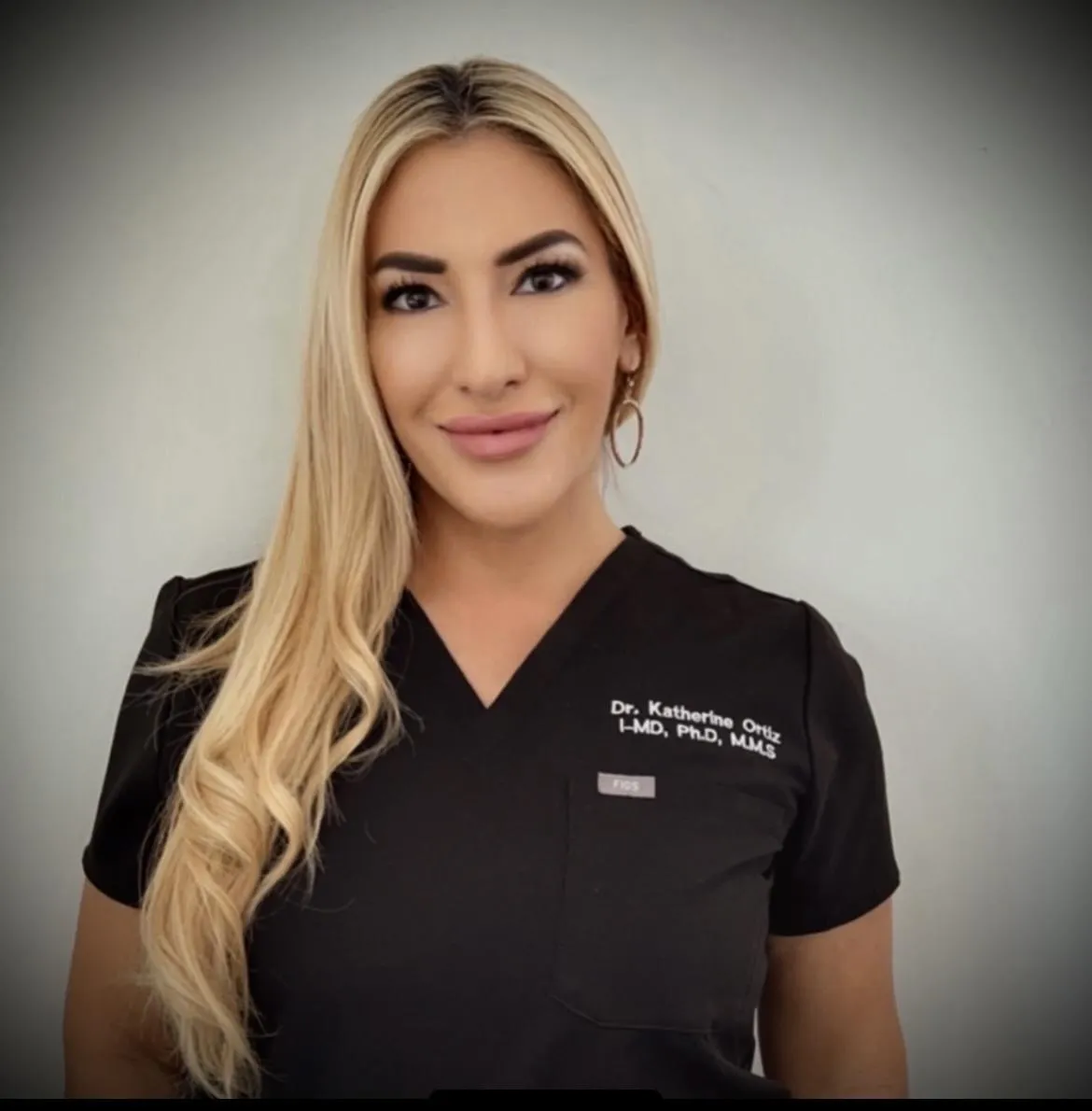
Meet Dr. Katherine Ortiz
Dr. Katherine Ortiz is the founder of DNA Wellness and Longevity Institute in Bonita Springs, FL. She is a board-certified Physician Associate and holds a Ph.D. in Integrative Medicine from Quantum University, with fellowship training through the American Academy of Anti-Aging Medicine (A4M) and the University of South Florida in functional and regenerative medicine.
Her practice is built on a foundational belief: that the body has an extraordinary capacity to heal and self-regulate when given the right support. Dr. Ortiz investigates root causes — hormonal imbalances, nutritional deficiencies, genetic factors — and builds individualized protocols designed to restore function and optimize long-term health.
Every protocol at DNA Wellness is ordered, reviewed, and monitored directly by Dr. Ortiz.


