
Regenerative Medicine · Bonita Springs, Fl
PRP Hair Restoration in Bonita Springs, FL
Physician-Supervised Platelet-Rich Plasma Treatment for Hair Thinning & Loss in Men & Women
PRP (Platelet-Rich Plasma) hair restoration uses concentrated growth factors from your own blood to reactivate dormant hair follicles, extend the active growth phase, and improve hair density and shaft thickness — without surgery, synthetic drugs, or the side effects associated with medications like finasteride. Dr. Katherine Ortiz at DNA Wellness and Longevity Institute evaluates hair loss through a comprehensive clinical lens — including the hormonal and nutritional factors that most hair restoration clinics never assess — and delivers PRP as part of a root-cause protocol tailored to your specific pattern of loss.
Why patients choose us
Physician-Led
All protocols supervised by
Dr. Katherine Ortiz I-MD, Ph.D., PA-C, M.M.S., ABAAHP
Root-Cause Approach
Hormonal and nutritional factors evaluated alongside PRP
SW Florida
Serving Bonita Springs, Naples, Estero & Fort Myers
Treatment Overview
PRP Therapy
Physician-Supervised
Your Own Blood — No Synthetics
43-RCT Meta-Analysis Support
Bonita Springs, FL
What Is PRP Hair Restoration?
How PRP Stimulates Hair Regrowth
Hair follicles are metabolically active, highly vascularized structures that depend on a continuous supply of growth signals to sustain the anagen (active growth) phase. In androgenetic alopecia — the most common form of hair loss, affecting up to 80% of men and 40% of women by age 70 — follicles progressively miniaturize as DHT binding disrupts this signaling, shortening the growth phase and producing finer, shorter hairs until the follicle eventually becomes dormant. The critical clinical insight is that dormant follicles are not dead follicles — they retain the capacity to be reactivated when the right biological signals are restored.
PRP hair restoration works by concentrating the platelets in your own blood to 3–5 times their normal density and injecting that concentrate directly into the scalp at the level of the hair follicle. Platelets are repositories of growth factors — including PDGF, VEGF, TGF-β, EGF, and IGF-1 — that govern angiogenesis, cell proliferation, follicular survival, and the extension of the anagen phase. When delivered at therapeutic concentration into the scalp, these growth factors stimulate follicular progenitor cells, improve blood flow to the follicle bed, suppress follicular apoptosis, and promote the transition of miniaturized or dormant follicles back into active growth. A 2025 meta-analysis of 43 randomized controlled trials confirmed that PRP significantly improves hair density and thickness in androgenetic alopecia, with clinical studies demonstrating 30–40% increased hair density after 3–6 months of treatment and meaningful improvement in 70–80% of patients when administered using established protocols.
What distinguishes Dr. Ortiz's approach is the clinical evaluation that precedes PRP. Hair loss is frequently driven or accelerated by factors a dermatologist or hair restoration specialist does not typically investigate: thyroid dysfunction, estrogen and testosterone imbalance, DHT-mediated follicular suppression, iron deficiency, nutritional deficiencies, and chronic inflammation. Dr. Ortiz evaluates these factors — and where they are contributing, addresses them alongside PRP — because treating the scalp without treating the systemic drivers produces inferior results. This is functional medicine applied to hair restoration.
How It Helps
Potential Benefits of PRP Hair Restoration
Hair Density & Follicular Reactivation Body
The primary measurable outcome of PRP hair restoration is increased hair density — more hairs per square centimeter of scalp — which reflects both reactivation of dormant follicles and thickening of miniaturized ones. Clinical studies show statistically significant increases in hair density and diameter on PRP-treated scalp versus placebo, with improvements most pronounced at the 3- and 6-month marks as the treatment cascade unfolds. A 2025 systematic review and meta-analysis of 43 RCTs confirmed PRP's superiority over placebo and favorable comparison to topical minoxidil — including meaningful improvements in hair shaft caliber (thickness), an outcome minoxidil does not reliably produce. Results are best in patients with early-stage loss (Norwood-Hamilton I–III in men, Ludwig I–II in women), where a meaningful population of viable dormant follicles still exists.
Hormone-Related Hair Loss & Women's Thinning Body
Hair loss in women is frequently multifactorial — driven by the hormonal shifts of perimenopause and menopause (declining estrogen, relative androgen dominance), thyroid dysfunction, elevated cortisol, iron deficiency, and post-partum hormonal changes — in combination with an underlying androgenetic pattern. Standard hair restoration approaches that treat only the scalp miss these systemic drivers entirely. Dr. Ortiz's evaluation specifically investigates the hormonal and nutritional contributors to hair thinning in women, addresses them where confirmed through appropriate testing, and integrates PRP into a protocol that treats the scalp and the systemic environment simultaneously. For women in perimenopause or menopause already working with Dr. Ortiz on hormone optimization, PRP hair restoration is a logical and frequently synergistic addition.
Non-Surgical, No Systemic Side Effects Body
Unlike finasteride (the most common oral medication for male pattern hair loss), which works by blocking DHT systemically and carries well-documented risks of sexual dysfunction, depression, and persistent post-finasteride syndrome in a subset of patients, PRP hair restoration uses your own blood and acts locally at the follicle level — with no systemic drug exposure, no risk of allergic reaction, and no dependency. Unlike hair transplant surgery, there is no general anesthesia, no incisions, no scarring, and no weeks-long recovery. The procedure is performed in-office in approximately 60–75 minutes. The most common post-procedure experience is mild scalp tenderness and redness for 24–48 hours. PRP can be used as a standalone therapy or in combination with other hair-supportive interventions — including hormone optimization, IV nutrient therapy, and microneedling for enhanced follicular uptake.
Your Journey
What To Expect with Dr Ortiz
Step 01 — Comprehensive Hair & Hormonal Assessment Your first appointment includes a thorough review of your hair loss pattern, timeline, family history, and any prior treatments. Dr. Ortiz orders a targeted lab panel — thyroid (TSH, free T3, free T4), ferritin, DHEA-S, testosterone (total and free), DHT where indicated, estradiol, and nutritional markers including zinc and vitamin D — to identify systemic contributors to hair loss that PRP alone cannot resolve. Patients with active scalp infections, scarring alopecias (lichen planopilaris, frontal fibrosing alopecia), or active malignancy are generally not appropriate PRP candidates — this evaluation identifies these exclusions before proceeding. Understanding the full picture also allows Dr. Ortiz to set realistic expectations about timeline and the degree of improvement PRP can realistically achieve in your specific pattern.
Step 02 — The PRP Procedure On treatment day, a small amount of blood is drawn and processed in a centrifuge for approximately 10–15 minutes to concentrate the platelets. The PRP is then injected into the scalp using a fine needle in a series of small injections distributed across the area of concern — the crown, temples, hairline, or diffuse thinning area depending on your pattern. A topical numbing agent is applied prior to minimize discomfort. The full procedure takes approximately 60–75 minutes. Most patients receive an initial series of 3–4 sessions spaced 4–6 weeks apart for optimal follicular loading. Some patients undergo scalp microneedling (dermaroller or dermapen) at the same session to enhance growth factor uptake — Dr. Ortiz will discuss this option during your consultation.
Step 03 — Timeline, Maintenance & Ongoing Support Hair growth is inherently a slow biological process — PRP results unfold gradually. Most patients begin to notice reduced shedding within the first 4–6 weeks, followed by early density improvements at 3 months and most pronounced results at 6 months after the initial treatment series. Maintenance sessions every 6–12 months are typically recommended to sustain results, as androgenetic alopecia is an ongoing process that PRP modulates but does not permanently stop. Dr. Ortiz monitors your progress and adjusts the protocol as needed — including evaluating whether hormonal or nutritional optimization is contributing to or limiting your PRP outcomes over time.
Questions Answered
Frequently Asked Questions About Hair Restoration
Q1: How is PRP hair restoration different from minoxidil or finasteride? Minoxidil (Rogaine) works by prolonging the growth phase and increasing blood flow to the follicle — it is effective for many patients but requires indefinite daily use, produces minimal improvement in hair shaft thickness, and causes a shedding phase when first started. Finasteride blocks DHT systemically and is effective for male pattern loss, but carries documented risks of sexual dysfunction and mood changes in a subset of patients, and requires indefinite use to maintain results. PRP uses concentrated growth factors from your own blood to reactivate follicles and stimulate hair growth at the follicular level — with no systemic drug exposure, no daily compliance requirement, and evidence of improvement in hair thickness that topical medications do not reliably produce. It can also be used alongside minoxidil for patients who want to combine approaches, and it does not interact with hormone therapy or other medications Dr. Ortiz may be prescribing.
Q2: Will PRP work for my type of hair loss? PRP produces its best results in patients with androgenetic alopecia (male or female pattern hair loss) at early to moderate stages — Norwood-Hamilton grades I–III in men, Ludwig grades I–II in women — where a meaningful population of dormant but viable follicles still exists. It has also shown benefit in alopecia areata (patchy hair loss), telogen effluvium (diffuse shedding triggered by stress, illness, or hormonal shifts), and hair thinning associated with menopause or thyroid dysfunction. PRP is generally not effective for scarring alopecias (where follicles have been permanently destroyed by inflammation), fully bald areas with no viable follicles, or areas with complete follicular loss. Dr. Ortiz's assessment determines where you fall on this spectrum and whether PRP is the right primary intervention, a component of a broader protocol, or not appropriate for your pattern.
Q3: How many sessions will I need and how long do results last? Most patients complete an initial series of 3–4 sessions spaced 4–6 weeks apart. Early improvements in shedding reduction are often noticed within the first 4–6 weeks; density and thickness improvements become measurable at 3 months and most significant at 6 months. Because androgenetic alopecia is an ongoing biological process, maintenance sessions every 6–12 months are typically recommended to sustain results. Without maintenance, the follicular stimulation effect gradually diminishes and the underlying hair loss pattern reasserts. The combination of PRP with systemic hormone optimization — where hormonal drivers are present — tends to produce more durable results by addressing both the scalp and the systemic environment simultaneously.
Q4: Is PRP hair restoration appropriate for women with menopausal hair thinning? Yes — and this is one of the clinical areas where Dr. Ortiz's dual expertise in hormone optimization and regenerative medicine is particularly relevant. Menopausal and perimenopausal hair thinning is driven by declining estrogen (which normally supports follicular health), relative androgen dominance, and frequently compounded by thyroid dysfunction, iron deficiency, and elevated cortisol — all of which Dr. Ortiz evaluates as part of her assessment. PRP addresses the follicular environment directly; hormone optimization addresses the systemic drivers; together they produce results that neither achieves alone for this patient population. Women already working with Dr. Ortiz on hormone optimization are strong candidates to add PRP hair restoration to their protocol.
Q5: Is PRP hair restoration available in Bonita Springs and Southwest Florida? Yes. DNA Wellness and Longevity Institute, located at 26800 S Tamiami Trail, Suite 380 in Bonita Springs, offers physician-supervised PRP hair restoration for patients throughout Bonita Springs, Naples, Estero, Fort Myers, and surrounding Southwest Florida communities. Call (239) 250-7930 to schedule your consultation with Dr. Ortiz.
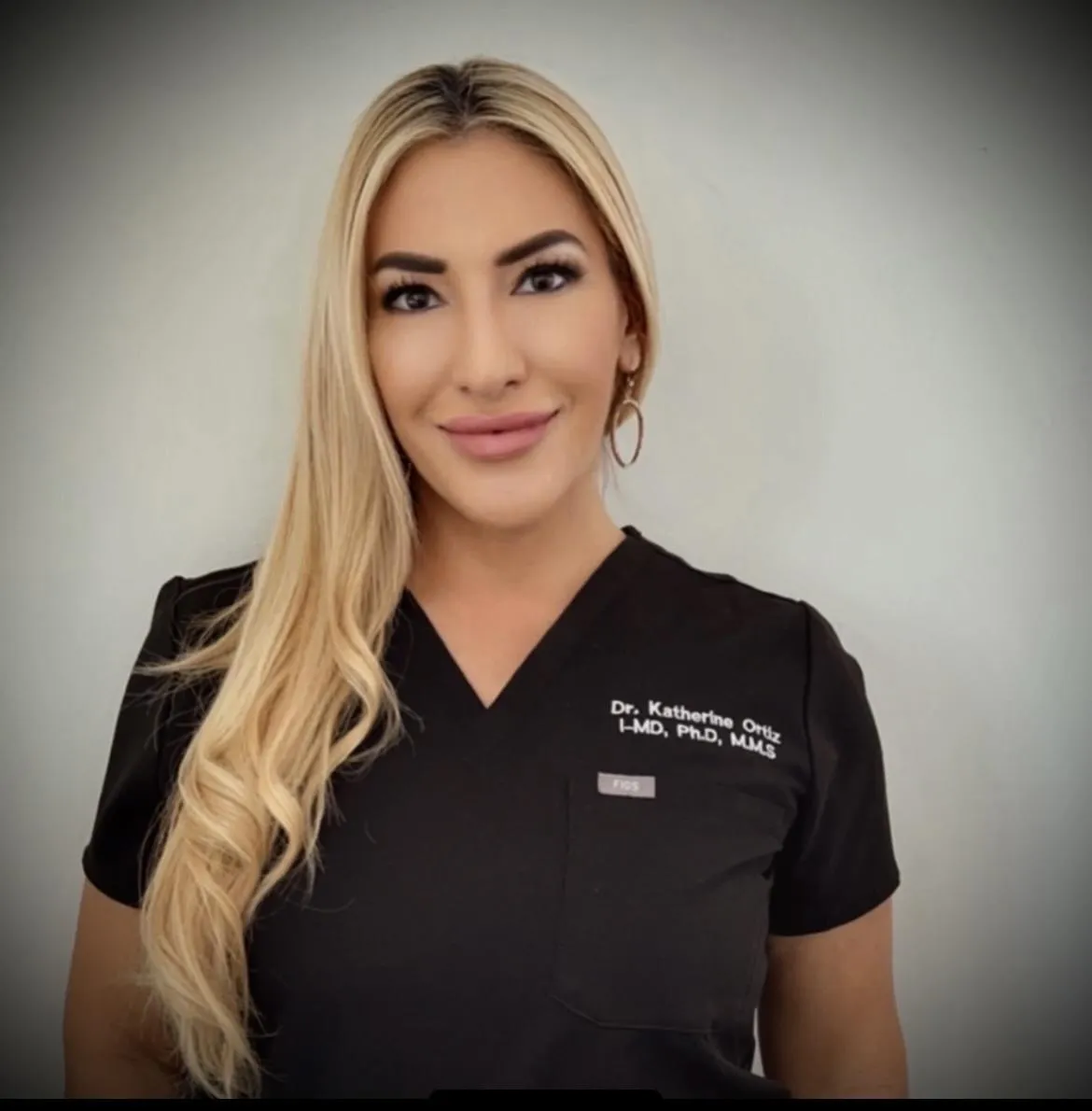
Meet Dr. Katherine Ortiz
Dr. Katherine Ortiz is the founder of DNA Wellness and Longevity Institute in Bonita Springs, FL. She is a board-certified Physician Associate and holds a Ph.D. in Integrative Medicine from Quantum University, with fellowship training through the American Academy of Anti-Aging Medicine (A4M) and the University of South Florida in functional and regenerative medicine.
Her practice is built on a foundational belief: that the body has an extraordinary capacity to heal and self-regulate when given the right support. Dr. Ortiz investigates root causes — hormonal imbalances, nutritional deficiencies, genetic factors — and builds individualized protocols designed to restore function and optimize long-term health.
Every protocol at DNA Wellness is ordered, reviewed, and monitored directly by Dr. Ortiz.


