
Women's Hormone Health · Bonita Springs, Fl
Hormone Therapy for Women in Bonita Springs, FL
Physician-Supervised Bioidentical Hormone Therapy for Perimenopause, Menopause & Hormonal Wellbeing
Declining estrogen, progesterone, and testosterone don't just cause hot flashes — they affect sleep, mood, memory, body composition, bone density, cardiovascular health, and sexual wellness in ways that compound over years if left unaddressed. Dr. Katherine Ortiz at DNA Wellness and Longevity Institute in Bonita Springs offers comprehensive bioidentical hormone therapy for women — built around your lab results, your symptoms, and your long-term health goals — not a standard protocol applied to every patient.
Why patients choose us
FDA-Approved
All pellet therapy supervised by Dr. Katherine Ortiz, PA-C, Ph.D.
Lab-Based
Every pellet dose is customized from your current hormone panel — not a standard dose
SW Florida
Serving Bonita Springs, Naples, Estero & Fort Myers

Understanding Bioidentical Hormone Therapy
What BHRT Is, and What the Current Evidence Actually Says
Bioidentical hormone therapy (BHRT) uses hormones that are chemically identical to those your body naturally produces — primarily 17β-estradiol (the same estrogen molecule your ovaries make), progesterone (the same molecule, not a synthetic progestin), and testosterone. This is a clinically meaningful distinction from conventional hormone replacement therapy as it was widely practiced in the 1990s and studied in the Women's Health Initiative (WHI) — which used conjugated equine estrogen (CEE, derived from pregnant mare's urine) combined with medroxyprogesterone acetate (MPA), a synthetic progestin with a different receptor profile and metabolism from natural progesterone. The 2002 WHI trial that triggered widespread fear of HRT was a study of those specific synthetic compounds in older postmenopausal women — not a study of bioidentical estradiol or natural progesterone.
The clinical evidence has substantially shifted since 2002. In 2025, the FDA took the landmark step of requesting removal of cardiovascular disease, breast cancer, and probable dementia language from the boxed warning on menopausal hormone therapy labels — reflecting a comprehensive reassessment of the benefit-risk balance that the original WHI trial had skewed. The timing hypothesis, supported by the ELITE study and reanalyses of the Nurses' Health Study, now shows that women who initiate hormone therapy within 10 years of menopause onset show neutral to beneficial cardiovascular effects — including a roughly 34% reduced risk of coronary heart disease in early initiators compared to non-users. The risk profile observed in the WHI was specific to women who were older at initiation and had been estrogen-deficient for years before starting therapy.
Bioidentical 17β-estradiol — particularly via transdermal delivery (patches, gels, creams) — avoids the first-pass hepatic metabolism of oral estrogen that elevates clotting factors and triglycerides, and has a more favorable cardiovascular and inflammatory profile. Natural micronized progesterone (Prometrium or compounded) does not carry the breast and cardiovascular risks associated with synthetic progestins like MPA. These distinctions inform every prescribing decision Dr. Ortiz makes.
How It Helps
What Hormone Therapy Can Address
Menopause & Perimenopause Symptom Relief Body
The hormonal transition of perimenopause — which can begin a decade before the final menstrual period — and menopause itself produce a constellation of symptoms driven by declining estradiol, progesterone, and testosterone: hot flashes and night sweats that fragment sleep; mood instability, anxiety, and depression; cognitive changes including brain fog and memory lapses; vaginal dryness and discomfort during intercourse; reduced libido; skin changes; weight redistribution toward the abdomen; and joint pain. These are not inconveniences to manage with over-the-counter products — they are measurable physiological consequences of hormone deficiency that respond directly to hormone restoration. BHRT addresses the root cause of every symptom on this list. Most women notice meaningful improvement in vasomotor symptoms (hot flashes, night sweats) within 2–4 weeks of starting therapy, with mood, sleep, and cognitive improvements following over 4–8 weeks as hormone levels stabilize.
Long-Term Health: Bones, Heart & Brain
The case for hormone therapy extends well beyond symptom management. Estrogen plays a central protective role in bone mineral density — women lose bone rapidly in the years immediately following menopause, and estrogen replacement initiated near menopause reduces fracture risk substantially. The cardiovascular protection associated with early HRT initiation — a roughly 34% reduced coronary heart disease risk in women starting within 10 years of menopause — has been established through multiple reanalyses and prospective cohort data. A 2025 Mosconi meta-analysis reported an 11.3% reduced risk of Alzheimer's disease associated with menopausal hormone therapy, particularly estrogen-only therapy initiated during midlife and sustained for longer durations. These protective effects are strongly timing-dependent — the window of benefit is in the perimenopausal and early postmenopausal years, not a decade after the fact. This is the clinical argument for evaluation and, where appropriate, treatment sooner rather than later.
Sexual Health, Energy & Quality of Life
Testosterone — often overlooked in women's hormone discussions — plays a critical role in libido, arousal, energy, motivation, mood, and lean muscle maintenance in women. Women lose more than half their testosterone by age 45. Restoring testosterone to appropriate physiological levels (not supraphysiologic) alongside estradiol produces meaningful improvements in sexual desire, orgasmic function, physical energy, and cognitive drive that estrogen-only therapy does not fully address. Dr. Ortiz includes testosterone assessment in every women's hormone panel and, where deficiency is confirmed, incorporates it into the treatment protocol. This comprehensive approach — addressing estrogen, progesterone, and testosterone together — is what distinguishes functional hormone optimization from symptom management with a single hormone.
What the WHI Study Got Right — and What It Got Wrong
This section exists because most women who come to DNA Wellness have been told by another provider that "HRT is dangerous" — a conclusion drawn from the 2002 Women's Health Initiative trial that has been substantially revised in the two decades since.
The WHI studied conjugated equine estrogen (CEE) combined with medroxyprogesterone acetate (MPA) — oral synthetic hormones given to women whose average age was 63, many of whom were 10–20 years past menopause. It found that this specific combination in this specific population increased certain cardiovascular and breast cancer risks. That was an important finding — for that combination, in that population.
What the WHI was not: it was not a study of bioidentical 17β-estradiol. It was not a study of natural micronized progesterone. It was not a study of transdermal delivery. And it was not a study of women in perimenopause or early menopause — the population most of Dr. Ortiz's patients represent.
In 2025, the FDA requested removal of cardiovascular disease, breast cancer, and probable dementia language from the MHT boxed warning — explicitly recognizing that the WHI's findings had been overapplied to all hormone therapy in all women of all ages, and that the benefit-risk balance looks materially different for women who initiate therapy close to menopause onset. This is the most significant regulatory shift in women's hormone health since 2002.
Dr. Ortiz discusses the WHI evidence, its limitations, and the current consensus openly at every consultation. Every woman deserves to make an informed decision — and informed means knowing what the evidence actually says, not what a 23-year-old study headline suggested.
Bioidentical Hormone Therapy Options at DNA Wellness
Dr. Ortiz offers multiple delivery methods for bioidentical hormones — and the selection is not a patient preference question alone. The delivery method affects pharmacokinetics (how the hormone enters and behaves in the bloodstream), safety profile, and appropriateness for specific clinical situations.
Transdermal (patches, gels, creams): The preferred delivery for estradiol in most patients. Transdermal estradiol avoids hepatic first-pass metabolism, meaning it does not elevate clotting factors, triglycerides, or C-reactive protein the way oral estrogen does. The ESTHER study confirmed that transdermal estradiol carries no increased venous thromboembolism risk, unlike oral estrogen. For women with cardiovascular risk factors or a history of clotting concerns, transdermal is the clinically appropriate route.
Pellets: Custom-compounded subcutaneous pellets inserted in the hip deliver consistent hormone levels over 3–6 months — particularly effective for testosterone delivery in women who need more than what topical application achieves, and for patients who want the consistency and compliance simplicity of a quarterly rather than daily regimen. See the dedicated Pellet Therapy page for full detail.
Oral (micronized progesterone): Natural micronized progesterone (Prometrium) is taken orally, typically at bedtime — where its sedative metabolites support sleep quality as an additional benefit. It is the preferred progesterone formulation for women with an intact uterus on estrogen therapy, as it protects the endometrium without the cardiovascular and breast risks associated with synthetic progestins.
Topical testosterone: Compounded testosterone cream applied to the inner wrist or thigh. Low-dose testosterone in women is typically prescribed at 1–2% of the dose used in men — it restores libido, arousal, energy, and cognitive drive without masculinizing effects when maintained at physiological levels.
Vaginal estrogen: For women whose primary concern is vaginal dryness, atrophy, recurrent UTIs, or urinary incontinence, topical vaginal estrogen delivers local benefit with minimal systemic absorption — appropriate for most women including those with a history of breast cancer, at their oncologist's guidance.
Your Journey
What To Expect with Dr Ortiz
Step 01 — Comprehensive Hormone Panel & Consultation Your first appointment with Dr. Ortiz begins with a full hormone evaluation — estradiol, total and free testosterone, SHBG, progesterone (timed if still cycling), DHEA-S, TSH, free T3/T4, cortisol, and a metabolic panel. Dr. Ortiz reviews your symptoms in detail, your personal and family medical history (particularly cardiovascular, clotting, and cancer history), your current medications, and your goals for therapy. This conversation — unhurried and thorough — determines not only whether BHRT is appropriate but which hormones, which formulation, which delivery method, and at what starting dose. No prescription is issued before this evaluation is complete.
Step 02 — Personalized Protocol & Initiation Based on your lab results and consultation, Dr. Ortiz prescribes a customized protocol — specifying hormone type, delivery method, dose, and timing. Prescriptions for compounded bioidentical hormones are sent to a licensed U.S. compounding pharmacy; FDA-approved bioidentical options (Estrace, Prometrium, Divigel, BiEstro-Care, etc.) are prescribed at licensed pharmacies. Dr. Ortiz explains the specific formulation she is prescribing, why she selected it over alternatives, what to expect during the initiation period, and what to watch for. Most patients begin to notice improvements in their most acute symptoms — hot flashes, sleep disruption — within 2–4 weeks.
Step 03 — Monitoring, Optimization & Ongoing Care Follow-up labs are drawn at 4–6 weeks after initiating therapy to confirm hormone levels are within the therapeutic target range and to assess early symptom response. Dr. Ortiz reviews both the labs and your subjective experience — adjusting doses where needed to optimize the balance. Annual hormone panels and clinical reviews are standard at DNA Wellness; dose adjustments are common over the first 2–3 cycles as the protocol is fine-tuned. For patients on pellet therapy, the re-pellet cycle provides natural built-in monitoring touchpoints. Dr. Ortiz integrates hormone therapy with any concurrent peptide, aesthetic, or wellness protocols she manages for each patient.
Questions Answered
Frequently Asked Questions About Hormone Therapy for Women
Q1: Is hormone therapy safe? I've heard it causes cancer. This fear comes almost entirely from the 2002 Women's Health Initiative trial, which studied synthetic hormones (conjugated equine estrogen and medroxyprogesterone acetate) in women whose average age was 63 — not bioidentical hormones in perimenopausal women. The clinical picture has changed substantially since then. In 2025, the FDA requested removal of cardiovascular disease, breast cancer, and probable dementia language from the menopausal hormone therapy boxed warning, reflecting a comprehensive reassessment of the evidence. The timing hypothesis, now supported by multiple large studies, demonstrates that women who initiate hormone therapy within 10 years of menopause have a materially different — and generally favorable — benefit-risk profile compared to older initiators. Bioidentical 17β-estradiol and natural micronized progesterone have more favorable profiles than the synthetic compounds studied in the WHI. Dr. Ortiz discusses your individual risk factors in detail at every consultation.
Q2: What is the difference between bioidentical hormones and conventional HRT? Conventional HRT as studied in the WHI used conjugated equine estrogen (derived from pregnant mare's urine) and medroxyprogesterone acetate (MPA), a synthetic progestin. Bioidentical hormones use 17β-estradiol — the same estrogen molecule your ovaries produce — and natural micronized progesterone — the same progesterone molecule, not a synthetic analog. The receptor binding, metabolism, and clinical effects of bioidentical hormones more closely match your body's own hormones than synthetic versions do. This distinction is clinically meaningful: natural micronized progesterone does not carry the breast and cardiovascular risks associated with MPA. Bioidentical estradiol delivered transdermally avoids the clotting and inflammatory effects of oral synthetic estrogen. Dr. Ortiz prescribes bioidentical hormones exclusively.
Q3: When is the right time to start hormone therapy? The evidence now strongly supports the timing hypothesis: beginning hormone therapy within 10 years of menopause onset — ideally in perimenopause or early postmenopause — is associated with the most favorable benefit-risk profile. Women who delay therapy by a decade or more after estrogen deficiency begins may not experience the same cardiovascular and neuroprotective benefits, and may face a different risk profile when starting. This does not mean hormone therapy is inappropriate for older women — it means the conversation is different and requires individual risk-benefit assessment. For women experiencing perimenopausal symptoms, the evidence now supports evaluation and, where appropriate, initiation rather than the "wait and see" approach many physicians still take.
Q4: Does hormone therapy cause weight gain? This is one of the most common concerns women bring to consultation — and it is frequently the result of conflating the hormonal weight gain of menopause itself with the effects of hormone therapy. The weight redistribution and increased abdominal fat most women notice in their 40s and 50s is driven by estrogen deficiency, not by HRT. In fact, estrogen therapy tends to attenuate the metabolic changes that drive menopausal weight gain by improving insulin sensitivity, preserving lean muscle mass, and reducing visceral fat accumulation. Women who start HRT close to menopause often find it easier to maintain their body composition than those who don't — not because HRT is a weight loss therapy, but because restoring estrogen removes a primary metabolic driver of weight gain.
Q5: Is bioidentical hormone therapy available in Bonita Springs and Southwest Florida? Yes. DNA Wellness and Longevity Institute, located at 26800 S Tamiami Trail, Suite 380 in Bonita Springs, offers comprehensive bioidentical hormone therapy for women under the direct supervision of Dr. Katherine Ortiz. The clinic serves patients throughout Bonita Springs, Naples, Estero, Fort Myers, and surrounding Southwest Florida communities. Call (239) 250-7930 to schedule your hormone consultation.
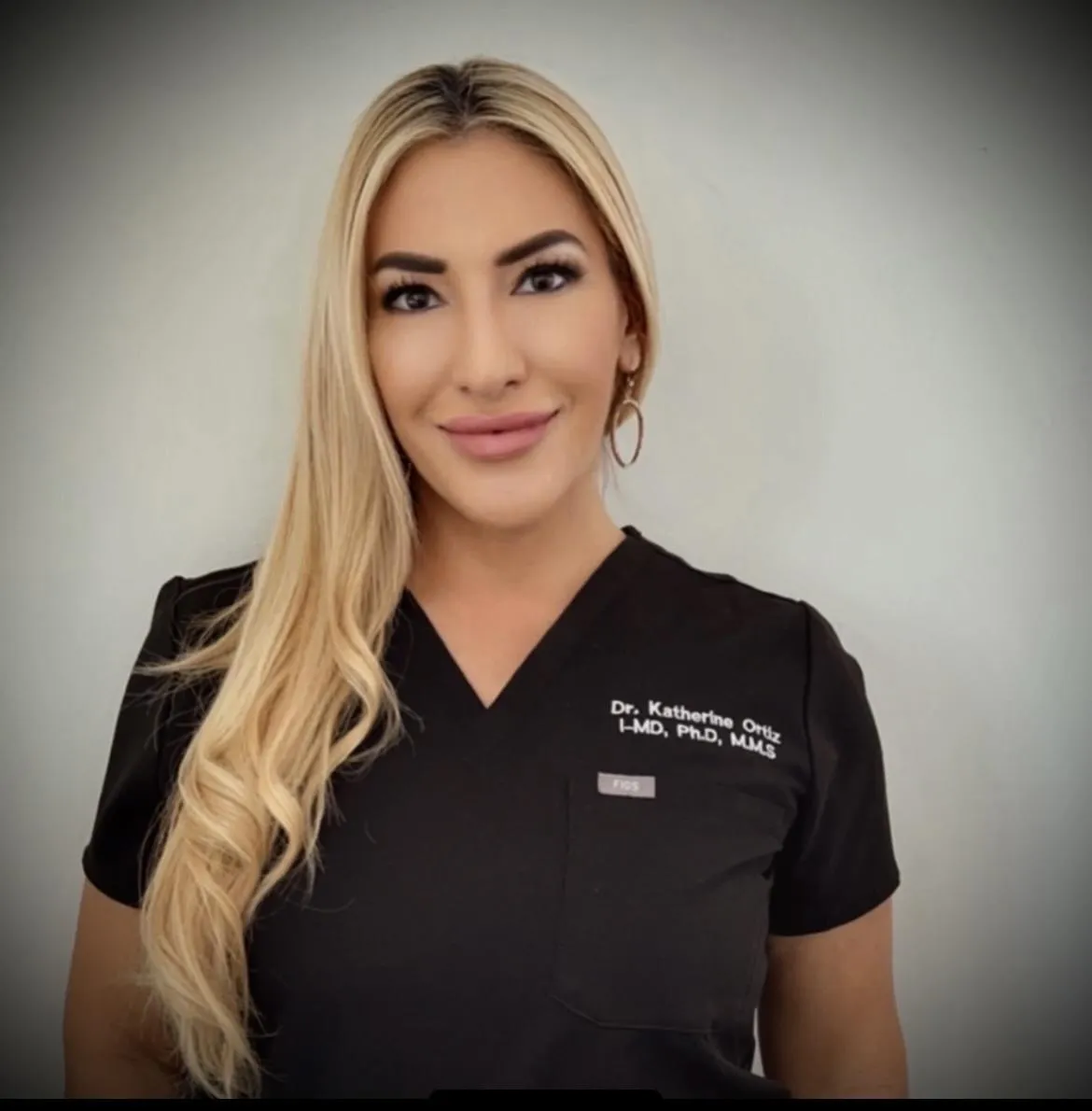
Meet Dr. Katherine Ortiz
Dr. Katherine Ortiz is the founder of DNA Wellness and Longevity Institute in Bonita Springs, FL. She is a board-certified Physician Associate and holds a Ph.D. in Integrative Medicine from Quantum University, with fellowship training through the American Academy of Anti-Aging Medicine (A4M) and the University of South Florida in functional and regenerative medicine.
Her practice is built on a foundational belief: that the body has an extraordinary capacity to heal and self-regulate when given the right support. Dr. Ortiz investigates root causes — hormonal imbalances, nutritional deficiencies, genetic factors — and builds individualized protocols designed to restore function and optimize long-term health.
Every protocol at DNA Wellness is ordered, reviewed, and monitored directly by Dr. Ortiz.


