
Men's Hormone Health · Bonita Springs, Fl
Testosterone Therapy for Men in Bonita Springs, FL
Physician-Supervised, Lab-Based TRT for Energy, Strength, Libido & Long-Term Health
Testosterone declines at approximately 1–2% per year after age 30, with clinically significant low testosterone affecting an estimated 20% of men over 60 — and a growing proportion of younger men. The consequences extend far beyond fatigue and low libido: untreated hypogonadism is associated with increased cardiovascular risk, metabolic syndrome, insulin resistance, bone density loss, and depression. Dr. Katherine Ortiz at DNA Wellness and Longevity Institute in Bonita Springs offers comprehensive testosterone optimization — built from your lab panel, guided by your symptoms and health goals, and monitored with the ongoing clinical oversight that safe, effective TRT requires.
Why patients choose us
Physician-Led
All TRT protocols supervised by Dr. Katherine Ortiz, PA-C, Ph.D.
Lab-Based
Every dose built from your complete hormone and metabolic panel
SW Florida
Serving Bonita Springs, Naples, Estero & Fort Myers
Understanding TRT
What Testosterone Therapy Is, and What the Current Evidence Says
Testosterone replacement therapy (TRT) restores testosterone to physiological levels in men with confirmed hypogonadism — a clinical condition defined by low serum testosterone alongside symptoms of deficiency. It is not a performance enhancement protocol, a vanity intervention, or an anti-aging shortcut: it is a medically indicated treatment for a hormone deficiency that, left untreated, is associated with measurable harm to metabolic, cardiovascular, psychological, and sexual health.
Hypogonadism affects up to 38% of men globally, with prevalence rising sharply with age. A 2024 analysis of 24,000 men linked low testosterone to a 60% higher risk of cardiovascular mortality compared to men with normal T levels — underscoring that low testosterone is the health risk, not treating it. The most significant development in TRT safety evidence came in 2023: the TRAVERSE trial, published in the New England Journal of Medicine, enrolled 5,246 men with hypogonadism and preexisting or high cardiovascular risk — the most rigorous safety study TRT has ever undergone. It found that testosterone therapy was non-inferior to placebo for major adverse cardiovascular events, with event rates of 7.0% versus 7.3% respectively. This landmark study definitively resolved more than a decade of cardiovascular uncertainty around TRT and allows clinicians to prescribe with substantially increased confidence in appropriately selected patients.
An important clinical distinction Dr. Ortiz makes in every consultation: lab "normal" is not the same as clinically optimal. Standard testosterone reference ranges are derived from population distributions — they include the bottom 2.5% of men as "normal." A man with a total testosterone of 320 ng/dL is technically within the reference range at most labs but may be significantly symptomatic. Dr. Ortiz evaluates free testosterone, SHBG, LH, FSH, estradiol, and metabolic context alongside total testosterone — because the full hormonal picture, not a single number, determines whether and how to treat.

How It Helps
What Testosterone Optimization Produces
Physical Performance, Body Composition & Vitality
Testosterone plays a direct role in muscle protein synthesis, fat oxidation, red blood cell production, and bone mineral density — which is why deficiency manifests as reduced strength, increased body fat, and physical fatigue that no amount of training corrects. TRT consistently demonstrates measurable improvements in lean muscle mass, reduction in fat mass (particularly visceral fat), improved exercise capacity, and enhanced physical recovery in men with confirmed hypogonadism. The Endocrine Society's TRT clinical practice guideline documents improvements in muscle strength, bone density, and body composition as established outcomes of appropriately administered testosterone therapy. For men who have been training consistently but not seeing the results their effort should produce, confirmed low T is frequently the missing variable.
Sexual Health, Libido & Erectile Function
Testosterone is the primary hormonal driver of male sexual desire — and its decline is a leading contributor to reduced libido, diminished sexual satisfaction, and the vascular and neurological components of erectile dysfunction. TRT reliably restores sexual desire and function in men with confirmed hypogonadism, with improvement in libido typically appearing within weeks of reaching therapeutic levels. For men with erectile dysfunction specifically, TRT addresses the hormonal foundation of vascular health — but ED frequently has multiple contributing factors, which is why Dr. Ortiz evaluates TRT as part of a broader men's sexual health protocol that may include Alma Duo™ shockwave therapy, the P-Shot® PRP, or PT-141 depending on the specific pattern of dysfunction.
Cognitive Clarity, Mood & Long-Term Health
Testosterone receptors are present throughout the brain, and their decline contributes to the cognitive and mood changes men with hypogonadism consistently report — brain fog, reduced motivation, mood instability, and the general sense of diminished mental sharpness. TRT improves mood, reduces depressive symptoms, and restores cognitive performance in men with confirmed deficiency. The long-term health argument for TRT in appropriate patients is increasingly compelling: testosterone's protective roles in cardiovascular function, insulin sensitivity, bone density, and inflammatory regulation mean that treating deficiency early — rather than watching it progress — is the better clinical strategy for men in their 40s and 50s who want to maintain health into later decades.
Your Journey
What To Expect with Dr Ortiz
Step 01 — Comprehensive Testosterone Panel & Consultation Your first appointment includes a full hormone and metabolic evaluation: total testosterone (morning draw — levels peak in the morning), free testosterone, SHBG (sex hormone-binding globulin), LH and FSH (to determine whether low T is primary or secondary hypogonadism), estradiol, PSA (baseline prostate specific antigen), CBC (complete blood count — TRT can increase red blood cell production and hematocrit requires monitoring), and a metabolic panel. Dr. Ortiz reviews your results in clinical context — not just whether you are "in range" but whether your levels are consistent with optimal function for your age, symptoms, and health goals. This conversation determines whether TRT is indicated, what delivery method is appropriate, what starting dose makes sense, and what monitoring protocol will be used.
Step 02 — Protocol Initiation & First Weeks Once your protocol is prescribed, Dr. Ortiz's team provides full instruction on injection technique (if injections are chosen) or gel/cream application protocol. Most men begin to notice improvements in energy and mood within 2–4 weeks of reaching therapeutic testosterone levels. Libido and sexual function typically improve at 4–6 weeks. Muscle mass and body composition changes develop over 3–6 months of consistent therapy. A brief increase in energy followed by a plateau at week 3–4 is common and typically resolves as levels stabilize — Dr. Ortiz prepares patients for this timeline so expectations match the actual trajectory of improvement.
Step 03 — Follow-Up Monitoring & Long-Term Management Follow-up labs are drawn at 6–8 weeks to confirm testosterone levels have reached the target range, assess estradiol conversion (aromatization management), evaluate hematocrit, and check PSA. Dr. Ortiz reviews both labs and symptom response at this appointment and makes any dosing adjustments. Annual comprehensive panels — including testosterone, metabolic markers, CBC, PSA, and lipids — are standard at DNA Wellness. TRT is typically a long-term commitment: testosterone levels don't recover to pre-deficiency levels after stopping therapy, and ongoing management is the clinical expectation rather than an exception.
Questions Answered
Frequently Asked Questions About Testosterone Therapy
Q1: Is testosterone therapy safe? I've heard it causes heart attacks. This concern arose from conflicting studies in the early 2010s and an FDA safety communication that added cardiovascular warnings to TRT labels. The field has evolved substantially since then. The 2023 TRAVERSE trial — the largest, most rigorous cardiovascular safety study of TRT ever conducted, enrolling 5,246 men in a randomized placebo-controlled design — found that testosterone therapy was non-inferior to placebo for major adverse cardiovascular events (7.0% vs. 7.3% event rates). This was published in the New England Journal of Medicine and has substantially resolved the cardiovascular safety uncertainty. It is worth noting that low testosterone itself is associated with significantly higher cardiovascular risk — a 2024 analysis of 24,000 men found a 60% higher cardiovascular mortality risk in men with low T compared to those with normal levels. The clinical evidence now increasingly supports treating confirmed hypogonadism rather than leaving it untreated in appropriately selected patients.
Q2: My doctor said my testosterone is "normal" — why do I still feel terrible? Standard laboratory reference ranges for testosterone are derived from population distributions and include the bottom 2.5% of men as "normal." A man with a total testosterone of 300–400 ng/dL may be technically within the reference range at most labs but can be significantly symptomatic — particularly if his free testosterone is reduced by elevated SHBG, or if he previously had testosterone levels in the 600–900 ng/dL range. Dr. Ortiz evaluates free testosterone, SHBG, LH, FSH, estradiol, and the full clinical picture alongside total T. The goal is functional optimization — what testosterone level allows you to feel and perform at your best — not simply getting above a floor that was set to describe the population rather than define optimal health.
Q3: Will TRT affect my fertility? Yes — this is an important and often undisclosed clinical fact. Exogenous testosterone suppresses the hypothalamic-pituitary-gonadal (HPG) axis, reducing LH and FSH production and suppressing spermatogenesis. Men on standard TRT protocols typically become oligospermic or azoospermic within a few months of starting therapy — meaning TRT should be considered a form of male contraception. For men who are actively trying to conceive, Dr. Ortiz discusses alternative approaches that can restore or maintain testosterone levels while preserving fertility — including hCG monotherapy or clomiphene citrate protocols. This conversation happens at every consultation with men of reproductive age before any TRT prescription is issued.
Q4: What are the different ways to take testosterone? TRT is available in several delivery forms, each with different pharmacokinetic profiles and practical considerations. Injections (testosterone cypionate or enanthate) are the most commonly prescribed — weekly or biweekly, intramuscular or subcutaneous. Topical gels and creams applied daily provide consistent absorption but require attention to transfer risk in households with women or young children. Subcutaneous pellets inserted in the hip every 4–6 months offer the longest duration and highest compliance convenience without daily or weekly requirements. Dr. Ortiz selects the delivery method based on your clinical situation, lifestyle, household composition, and preference — and can switch methods if the initial approach isn't working optimally.
Q5: Is testosterone therapy available in Bonita Springs and Southwest Florida? Yes. DNA Wellness and Longevity Institute, located at 26800 S Tamiami Trail, Suite 380 in Bonita Springs, offers physician-supervised testosterone replacement therapy for men under the direct supervision of Dr. Katherine Ortiz. The clinic serves patients throughout Bonita Springs, Naples, Estero, Fort Myers, and surrounding Southwest Florida communities. Call (239) 250-7930 to schedule your testosterone consultation.
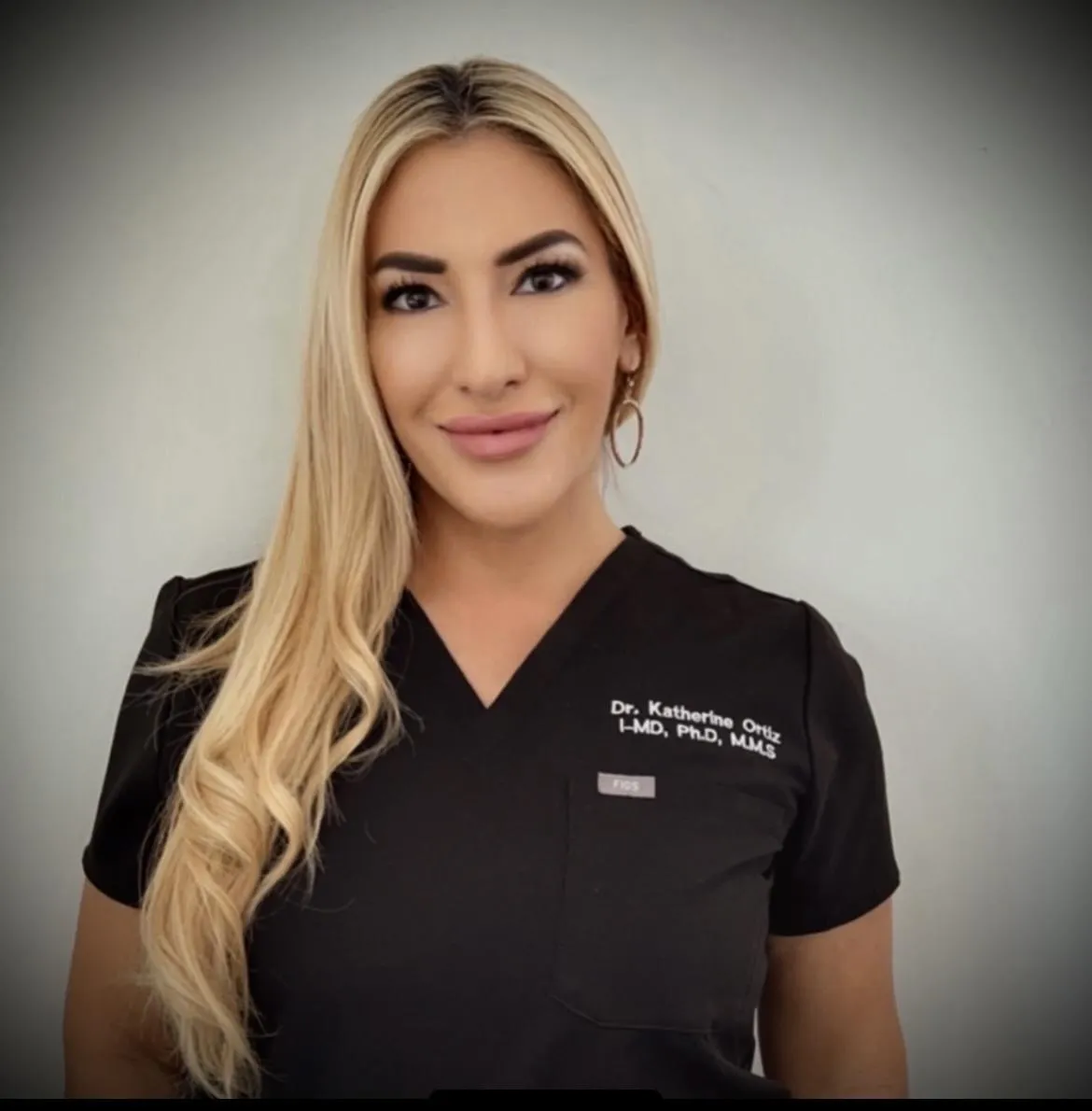
Meet Dr. Katherine Ortiz
Dr. Katherine Ortiz is the founder of DNA Wellness and Longevity Institute in Bonita Springs, FL. She is a board-certified Physician Associate and holds a Ph.D. in Integrative Medicine from Quantum University, with fellowship training through the American Academy of Anti-Aging Medicine (A4M) and the University of South Florida in functional and regenerative medicine.
Her practice is built on a foundational belief: that the body has an extraordinary capacity to heal and self-regulate when given the right support. Dr. Ortiz investigates root causes — hormonal imbalances, nutritional deficiencies, genetic factors — and builds individualized protocols designed to restore function and optimize long-term health.
Every protocol at DNA Wellness is ordered, reviewed, and monitored directly by Dr. Ortiz.


