
Regenerative Medicine · Bonita Springs, Fl
PRP Joint Restoration in Bonita Springs, FL
Physician-Supervised Platelet-Rich Plasma Therapy for Knee, Hip & Shoulder Pain
PRP (Platelet-Rich Plasma) joint restoration uses concentrated healing proteins from your own blood to reduce inflammation, support cartilage health, and restore joint function — without surgery, synthetic drugs, or the long-term risks of cortisone. Dr. Katherine Ortiz at DNA Wellness and Longevity Institute evaluates joint pain patients through a full clinical assessment and delivers PRP under physician supervision, tailored to the specific joint, severity, and your overall health picture.
Why patients choose us
Physician-Led
All protocols supervised by
Dr. Katherine Ortiz I-MD, Ph.D., PA-C, M.M.S., ABAAHP
Your Own Biology
PRP uses concentrated growth factors from your own blood — no synthetics
SW Florida
Serving Bonita Springs, Naples, Estero & Fort Myers
Treatment Overview
PRP Therapy
Physician-Supervised
Your Own Blood — No Synthetics
Supported by Phase
Bonita Springs, FL
What Is PRP Joint Restoration?
How PRP Therapy Works on Joints
Platelet-Rich Plasma (PRP) is produced by drawing a small amount of your own blood, spinning it in a centrifuge to concentrate the platelets to 3–5 times their normal density, and injecting that concentrate directly into the affected joint. Platelets are not just clotting agents — they are dense repositories of growth factors including PDGF, TGF-β, VEGF, and IGF-1 that govern tissue repair, collagen synthesis, angiogenesis, and inflammatory modulation. When delivered into a damaged joint at therapeutic concentration, PRP initiates a targeted healing cascade in tissue that would otherwise lack the blood supply and cellular resources to repair itself adequately.
In joint applications, PRP works through several simultaneous pathways: it modulates the local inflammatory environment — reducing the pro-inflammatory cytokines that drive chronic joint pain without shutting down the healing response entirely; it stimulates synoviocytes (cells lining the joint capsule) to produce more hyaluronic acid, improving joint lubrication and shock absorption; it promotes chondrocyte activity, supporting the health and longevity of cartilage tissue; and it drives angiogenesis to improve vascular delivery of nutrients to the peri-articular tissue. A 2025 meta-analysis of 56 randomized controlled trials confirmed that PRP outperforms both placebo and corticosteroids for chronic joint pain at 6 and 12 months — with cortisone showing superior results only in the first four weeks, after which PRP patients consistently report better pain control and function.
At DNA Wellness, Dr. Ortiz performs PRP joint restoration as part of a comprehensive evaluation — assessing the joint, imaging if relevant, and determining whether PRP is the appropriate intervention or whether it should be combined with other regenerative tools including peptide therapy or IV nutrient support for the systemic healing environment.
How It Helps
Potential Benefits of PRP Therapy
Pain Relief That Lasts Body
Cortisone injections remain the most common conventional joint treatment — but their pain relief is typically short-lived (4–8 weeks) and repeated injections accelerate cartilage breakdown over time. PRP works differently: rather than suppressing inflammation chemically, it remodels the inflammatory environment biologically using your own growth factors. Clinical trials show PRP for knee osteoarthritis achieves 70–80% improvement at 12 months. For patients with mild to moderate joint disease (Kellgren-Lawrence grades I–III) who have plateaued on physical therapy and are looking for a meaningful intervention before considering surgery, PRP delivers durable relief grounded in the body's own repair biology.
Cartilage Support & Joint Health Body
Cartilage has limited natural healing capacity because it lacks direct blood supply — which is precisely why joint degeneration is so progressive once it begins. PRP addresses this by delivering growth factors directly into the joint space, stimulating chondrocyte activity and supporting the structural integrity of remaining cartilage. It also increases synovial fluid production through its effect on the joint lining cells, improving joint lubrication and reducing the friction-related pain that worsens with activity. For patients managing early to moderate osteoarthritis in the knee, hip, or shoulder, PRP's cartilage-supportive effects may meaningfully slow the progression of joint degeneration alongside appropriate physical activity and nutritional support.
Non-Surgical, Low-Downtime Recovery Body
Non-Surgical, Low-Downtime Recovery Body: PRP joint restoration is an in-office procedure. Your blood is drawn, processed, and injected in a single appointment — no anesthesia, no hospitalization, no surgical recovery. Most patients return to normal daily activities within 24–48 hours, with activity restrictions specific to the joint treated and the acuity of your condition. Because PRP uses your own blood, there is no risk of allergic reaction or rejection. The most common post-procedure experience is mild soreness and warmth at the injection site for 2–5 days — a normal part of the inflammatory healing response being initiated. Dr. Ortiz provides specific post-procedure guidance for each patient based on joint location and protocol.
Your Journey
What To Expect with Dr Ortiz
Step 01 — Clinical Assessment & Candidacy Evaluation Your first appointment with Dr. Ortiz includes a thorough review of your joint pain history — location, duration, what makes it better or worse, prior treatments, imaging if available, and current medications. Candidacy matters: PRP works best for mild to moderate joint disease. Patients with severe bone-on-bone degeneration (Kellgren-Lawrence grade IV), severe thrombocytopenia, active joint infection, or certain platelet disorders may not be appropriate candidates. BMI, blood sugar control, and NSAID use also affect outcomes — Dr. Ortiz reviews all of these factors before recommending PRP, and will advise you to pause NSAIDs at least 1–2 weeks before treatment as they blunt the platelet response.
Step 02 — The PRP Procedure On the day of your procedure, a small amount of blood is drawn — typically 15–60ml depending on your protocol — and processed in an FDA-cleared centrifuge for approximately 10–15 minutes to concentrate the platelets. The PRP is then injected directly into the joint under clinical precision. The entire appointment takes approximately 45–60 minutes. Dr. Ortiz may use a series of injections depending on your joint and protocol — most patients receive 1–3 injections spaced 3–5 weeks apart for optimal loading. You will receive specific post-procedure instructions including activity guidance and what to expect in the first 48–72 hours.
Step 03 — Recovery & Follow-Up Most patients begin to notice meaningful improvement in pain and mobility at 4–8 weeks — PRP's effects build gradually as the healing cascade unfolds, unlike cortisone which peaks early and fades. Full benefit is typically assessed at 3 and 6 months. Dr. Ortiz schedules follow-up appointments to evaluate your response and determine whether additional injections or complementary interventions are indicated. For patients whose joint health is also influenced by systemic factors — hormone imbalance, chronic inflammation, nutritional deficiency — Dr. Ortiz integrates joint restoration into a broader protocol addressing those root causes simultaneously.
Questions Answered
Frequently Asked Questions About PRP Therapy
Q1: How is PRP different from cortisone injections? Cortisone is a synthetic corticosteroid that suppresses inflammation chemically — providing fast relief, typically within days, but lasting only 4–8 weeks. Repeated cortisone injections are associated with progressive cartilage degradation over time. PRP uses concentrated growth factors from your own blood to remodel the joint's inflammatory environment biologically — initiating a healing response rather than suppressing it. A 2025 meta-analysis of 56 randomized controlled trials found that PRP outperformed cortisone at every time point beyond four weeks, with patients reporting better pain control and joint function at 6 and 12 months. PRP takes longer to feel (weeks, not days), but its effects are more durable and it works with the joint's biology rather than against it.
Q2: Which joints can PRP treat? At DNA Wellness, Dr. Ortiz most commonly performs PRP joint restoration for the knee — where clinical evidence is strongest — as well as the hip, shoulder (including rotator cuff-related pain), ankle, elbow (including tennis and golfer's elbow), and wrist. PRP is also used for tendon and ligament injuries adjacent to joints including Achilles tendinopathy, patellar tendinitis, and plantar fasciitis. Dr. Ortiz evaluates each joint individually — the appropriate protocol, injection volume, and session frequency varies by joint location, severity, and your overall clinical picture.
Q3: Who is the best candidate for PRP joint restoration? PRP works best for adults with mild to moderate joint disease — clinically, Kellgren-Lawrence osteoarthritis grades I through III in the knee. Patients who are most likely to respond well have chronic joint pain (over 3–6 months), have already tried and plateaued on conservative care (physical therapy, rest, anti-inflammatories), have a BMI under 35, maintain reasonably good blood sugar control, and are not active smokers. Patients with severe bone-on-bone degeneration (grade IV), active joint infection, thrombocytopenia, or platelet dysfunction are generally not appropriate candidates. Dr. Ortiz's evaluation determines where you fall on this spectrum.
Q4: How many PRP sessions will I need? Most patients receive a series of 1–3 injections spaced 3–5 weeks apart for the initial treatment course. The number depends on the joint, the degree of degeneration, and your individual response. Some patients achieve meaningful relief after a single injection; others with more advanced disease benefit from the full loading series. After the initial series, follow-up injections are evaluated on a case-by-case basis — some patients maintain well for 12–18 months before a booster is indicated, others benefit from annual maintenance. Dr. Ortiz tracks your response at 3 and 6 months and makes recommendations based on your objective and subjective improvement.
Q5: Is PRP joint restoration available in Bonita Springs and Southwest Florida? Yes. DNA Wellness and Longevity Institute, located at 26800 S Tamiami Trail, Suite 380 in Bonita Springs, offers physician-supervised PRP joint restoration for patients throughout Bonita Springs, Naples, Estero, Fort Myers, and surrounding Southwest Florida communities. Call (239) 250-7930 to schedule your consultation with Dr. Ortiz.
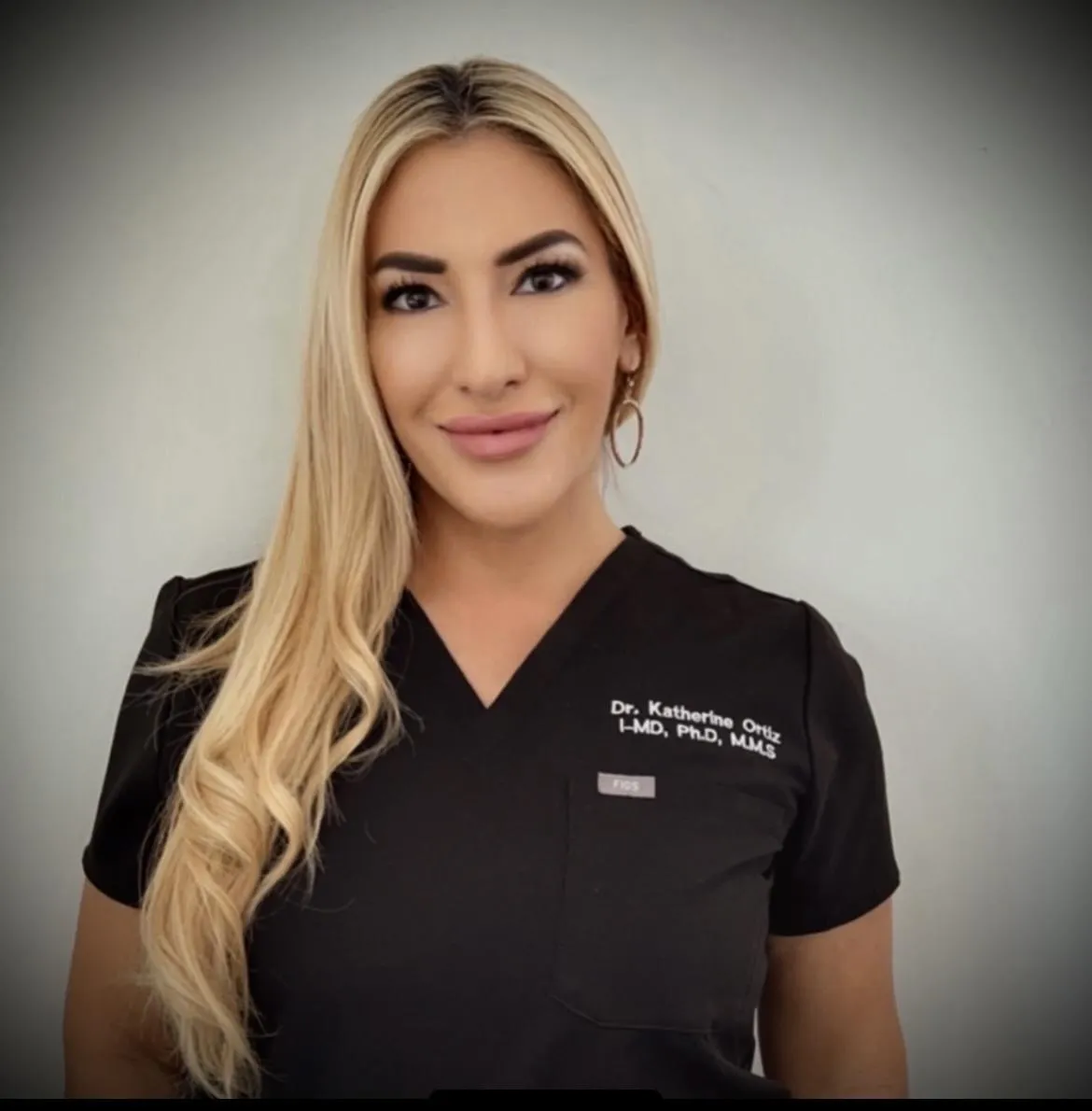
Meet Dr. Katherine Ortiz
Dr. Katherine Ortiz is the founder of DNA Wellness and Longevity Institute in Bonita Springs, FL. She is a board-certified Physician Associate and holds a Ph.D. in Integrative Medicine from Quantum University, with fellowship training through the American Academy of Anti-Aging Medicine (A4M) and the University of South Florida in functional and regenerative medicine.
Her practice is built on a foundational belief: that the body has an extraordinary capacity to heal and self-regulate when given the right support. Dr. Ortiz investigates root causes — hormonal imbalances, nutritional deficiencies, genetic factors — and builds individualized protocols designed to restore function and optimize long-term health.
Every protocol at DNA Wellness is ordered, reviewed, and monitored directly by Dr. Ortiz.
Ready to Explore PRP Joint Restoration With Dr. Ortiz?
Schedule a consultation at DNA Wellness and Longevity Institute in Bonita Springs. If you are managing chronic joint pain in your knee, hip, or shoulder — and you want a regenerative option grounded in clinical evidence before considering more invasive treatment — Dr. Ortiz will evaluate whether PRP joint restoration is the right next step for you.


