
Regenerative Medicine · Bonita Springs, Fl
PRP Facelift in Bonita Springs, FL
Physician-Supervised PRP + Filler Facial Rejuvenation — Immediate Results, Lasting Regeneration
The PRP Facelift combines platelet-rich plasma (PRP) from your own blood with hyaluronic acid dermal filler to achieve what neither can accomplish alone: immediate structural volume and lift, alongside progressive collagen regeneration that continues improving your skin for months. Dr. Katherine Ortiz, a Certified PRP Provider, performs this procedure at DNA Wellness and Longevity Institute in Bonita Springs as part of a personalized aesthetic and regenerative medicine approach.
Why patients choose us
Physician-Led
All protocols supervised by
Dr. Katherine Ortiz I-MD, Ph.D., PA-C, M.M.S., ABAAHP
Your Own Biology
PRP uses concentrated growth factors from your own blood — no synthetics
SW Florida
Serving Bonita Springs, Naples, Estero & Fort Myers
Treatment Overview
PRP Therapy
Physician-Supervised
PRP + Hyaluronic Acid Filler
Supported by Phase
Bonita Springs, FL
What Is the PRP Facelift?
How the PRP + Filler Combination Works
The PRP Facelift is a trademarked protocol that specifically combines platelet-rich plasma with hyaluronic acid (HA) dermal filler in a single treatment session — and the distinction matters clinically. Standard dermal filler treatments add volume in targeted areas but do not stimulate any biological regeneration. Standard PRP facials or microneedling treatments stimulate collagen production but provide no immediate volumizing effect. The PRP Facelift achieves both simultaneously through two complementary mechanisms.
The hyaluronic acid filler: injected first into areas of volume loss, hollow contours, and structural deflation — provides immediate lift and shape correction. The filler acts as a scaffold that restores facial architecture and creates the physical foundation for the treatment. Immediately following filler placement, PRP — concentrated from your own blood and rich in growth factors including PDGF, VEGF, TGF-β, and EGF — is injected into and around the same areas. PRP stimulates dermal fibroblasts to produce new collagen and elastin, promotes angiogenesis that improves skin vascularity and glow, and triggers a progressive tissue regeneration response that continues developing over 3–6 months. The result is a face that looks refreshed and volumized immediately — and continues to improve biologically over time as the collagen remodeling unfolds.
Dr. Ortiz is a Certified PRP Facelift Provider and performs the PRP Facelift as the injectable component of a broader aesthetic and longevity approach at DNA Wellness. She customizes filler placement and PRP injection patterns to each patient's facial anatomy and specific concerns rather than applying a standardized template — the facial architecture, the degree of volume loss, skin quality, and the patient's aesthetic goals all inform the protocol she designs at consultation.
How It Helps
What the PRP Facelift Can Achieve
Immediate Volume, Contour & Lift Body
The hyaluronic acid filler component of the PRP Facelift provides results you can see and feel the same day — restored volume in areas like the cheeks, temples, and under-eye hollows; softened nasolabial folds; improved jawline definition; and an overall lifting effect on facial contours that have deflated with age. HA fillers are biocompatible, fully reversible with hyaluronidase if needed, and integrate smoothly with surrounding tissue. In the context of the PRP Facelift, they serve a structural function — restoring the foundational volume on which the PRP's regenerative effects then build over the following weeks and months.
Collagen Regeneration & Skin Quality Body
While filler addresses structural volume, PRP addresses what filler cannot — the quality, texture, tone, and biological vitality of the skin itself. Growth factors delivered through PRP stimulate dermal fibroblasts to produce new collagen and elastin, improve skin hydration through endogenous hyaluronic acid synthesis, and enhance vascular supply to the dermis — producing a glow and skin quality improvement that synthetic products cannot replicate. Clinical evidence demonstrates PRP's ability to improve skin texture, reduce fine line depth, decrease acne scarring, even skin tone, and increase dermal elasticity in the months following treatment. Results peak at approximately 12 weeks and continue evolving through month 4–6 as remodeling progresses.
Natural Results, Minimal Downtime Body
Because the PRP Facelift uses your own blood alongside biocompatible filler, results look and feel natural rather than overdone — the growth factors work with your facial anatomy rather than imposing volume indiscriminately. There is no general anesthesia, no incisions, and no significant recovery period. Most patients return to normal activities within 24–48 hours. Common post-procedure effects include mild bruising, swelling, and redness at injection sites — typically resolving within 3–5 days. Results from the combined protocol typically last 12–18 months, longer than HA filler alone because the PRP's collagen-stimulating effects extend the quality and longevity of the outcome.
Your Journey
What To Expect with Dr Ortiz
Step 01 — Facial Assessment & Treatment Design Your consultation with Dr. Ortiz begins with a thorough assessment of your facial anatomy, skin quality, and the specific concerns you want to address — volume loss, skin laxity, texture, fine lines, hollowing, or overall facial rejuvenation. Dr. Ortiz evaluates your facial structure to determine appropriate filler type, placement, and volume, and discusses realistic outcomes based on your current skin condition and the degree of change you are seeking. Candidacy review includes your medical history, current medications (particularly blood thinners, which need to be paused before treatment), any prior filler history, and any skin conditions that may affect healing. This consultation is the most important part of the process — the treatment design is entirely specific to your anatomy.
Step 02 — The PRP Facelift On treatment day, a small amount of blood is drawn and processed in a centrifuge for 10–15 minutes while a topical numbing cream is applied to the face. Dr. Ortiz begins with strategic filler placement — injecting hyaluronic acid into the specific structural areas identified in your consultation — then follows with targeted PRP injections into the same regions and throughout the broader treatment area. The full procedure takes approximately 60–90 minutes depending on the scope of treatment. You will see immediate improvement from the filler and will feel the skin quality effects of PRP develop progressively over the following weeks. Mild bruising, swelling, and redness are expected and typically resolve within 3–5 days. Avoid strenuous exercise, alcohol, and prolonged sun exposure for 24–48 hours post-procedure.
Step 03 — Results Timeline & Maintenance The dual-mechanism nature of the PRP Facelift means results appear in two phases: immediate volumizing improvement visible the same day, and progressive skin quality improvement developing over 8–12 weeks as PRP-driven collagen remodeling continues. Most patients describe looking noticeably refreshed within the first week as post-procedure swelling resolves, with skin quality continuing to improve and results deepening through month 3. Full results are typically assessed at the 12-week mark. Dr. Ortiz schedules a follow-up at 6–8 weeks to evaluate your response and discuss whether a maintenance or touch-up session is appropriate. Annual maintenance sessions are recommended to sustain both filler volume and PRP's collagen-stimulating benefits.
Questions Answered
FAQ (5 PRP Facelift-specific questions)
Q1: How is the PRP Facelift different from a regular dermal filler treatment? A standard dermal filler treatment adds volume and structure in targeted areas — it does not stimulate any biological regeneration. When the filler dissolves, the results dissolve with it. The PRP Facelift adds PRP to the protocol: growth factors from your own blood stimulate new collagen production, improve skin texture and quality, and drive a biological regeneration response that continues for months. The combination produces results that are both immediately visible (from the filler) and progressively improving (from PRP's collagen remodeling) — and that last longer than filler alone because the PRP's effects complement and extend the structural improvement. It also addresses skin quality and texture in ways that filler cannot.
Q2: How is the Vampire Facelift® different from the PRP Facelift? These are two distinct procedures that are often confused. The PRP Facelift l involves applying PRP topically to the skin surface — typically following microneedling to drive the growth factors into the dermis. It addresses surface-level concerns: skin texture, pore size, fine lines, and tone. The Vampire Facelift® involves injecting both PRP and hyaluronic acid filler deeper into facial tissue — addressing structural volume loss, facial contour, and deeper tissue regeneration alongside skin quality. The Vampire Facelift® is a more comprehensive procedure with a broader scope of outcomes. Some patients benefit from both at different times; Dr. Ortiz will clarify which is appropriate for your specific goals and skin condition at consultation.
Q3: Will the PRP Facelift make me look overdone or unnatural? No — and this is a concern Dr. Ortiz takes seriously in how she approaches filler placement. The PRP Facelift is a restoration and rejuvenation procedure, not an augmentation. The goal is to restore what time has removed — volume, structural support, skin quality — not to fundamentally alter your appearance. Dr. Ortiz customizes filler placement conservatively to your facial architecture, using just enough volume to restore and lift rather than overfill. Because PRP works biologically through your own growth factors, the skin quality improvement it produces is inherently natural. The result is a face that looks like a healthier, more rested version of you — not a different face.
Q4: How long do results last and how many treatments will I need? The combined PRP Facelift protocol typically produces results lasting 12–18 months — longer than HA filler alone, because PRP's collagen regeneration extends and improves the quality of outcomes over time. Most patients begin with a single treatment session and assess results at 12 weeks. Some patients with more advanced volume loss or skin laxity benefit from two sessions spaced 6–8 weeks apart for the initial treatment course. Annual maintenance sessions are recommended to sustain both the structural and biological improvements. Your specific maintenance schedule will be determined based on how your skin responds, your age, and the degree of change being addressed.
Q5: Is the PRP Facelift available in Bonita Springs and Southwest Florida? Yes. Dr. Katherine Ortiz, a Certified PRP Provider, performs the PRP Facelift at DNA Wellness and Longevity Institute, located at 26800 S Tamiami Trail, Suite 380 in Bonita Springs. The clinic serves patients throughout Bonita Springs, Naples, Estero, Fort Myers, and surrounding Southwest Florida communities. Call (239) 250-7930 to schedule your consultation.
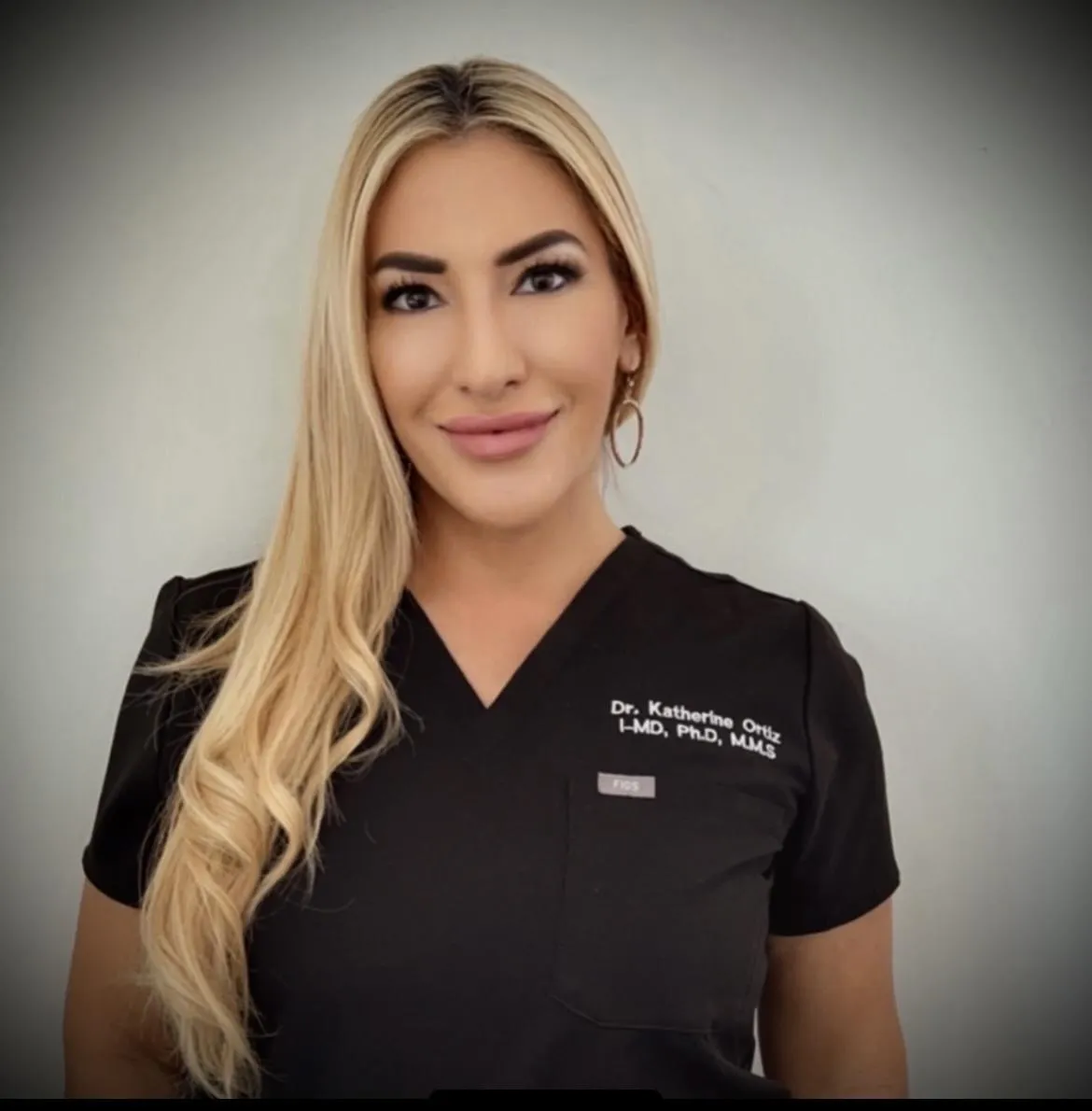
Meet Dr. Katherine Ortiz
Dr. Katherine Ortiz is the founder of DNA Wellness and Longevity Institute in Bonita Springs, FL. She is a board-certified Physician Associate and holds a Ph.D. in Integrative Medicine from Quantum University, with fellowship training through the American Academy of Anti-Aging Medicine (A4M) and the University of South Florida in functional and regenerative medicine.
Her practice is built on a foundational belief: that the body has an extraordinary capacity to heal and self-regulate when given the right support. Dr. Ortiz investigates root causes — hormonal imbalances, nutritional deficiencies, genetic factors — and builds individualized protocols designed to restore function and optimize long-term health.
Every protocol at DNA Wellness is ordered, reviewed, and monitored directly by Dr. Ortiz.


