
Peptide Therapy · Bonita Springs, Fl
MOTS-C Peptide Therapy in Bonita Springs, FL
Physician-Supervised Mitochondrial Metabolic Support & Longevity Optimization
MOTS-C is a mitochondrial-derived peptide prescribed by Dr. Katherine Ortiz at DNA Wellness and Longevity Institute. Unlike peptides synthesized through conventional cellular pathways, MOTS-C is encoded directly in mitochondrial DNA — the cell's energy-producing core — and acts as a master regulator of metabolic homeostasis. Often described as an "exercise mimetic," it activates the same cellular energy pathways triggered by physical activity, making it a clinically relevant tool for insulin resistance, stubborn fat metabolism, age-related energy decline, and longevity optimization.
Why patients choose us
Physician-Led
All protocols supervised by
Dr. Katherine Ortiz I-MD, Ph.D., PA-C, M.M.S., ABAAHP
Lab-Based
Protocol built from your bloodwork, not a template
SW Florida
Serving Bonita Springs, Naples, Estero & Fort Myers
Treatment Overview
MOTS-C Therapy
Physician-Supervised
Mitochondrial-Derived
FDA-Category 1 Compound
Bonita Springs, FL
What Is MOTS-C?
How MOTS-C Peptide Therapy Works
As part of our Peptide Therapy in Bonita Springs program, MOTS-C levels are naturally high in youth and decline measurably with age, a pattern that mirrors the broader metabolic slowdown most people experience in their 40s and beyond.
Its primary mechanism of action is the activation of AMPK — adenosine monophosphate-activated protein kinase — the body's master cellular energy sensor. AMPK activation is the same cascade triggered by exercise, caloric restriction, and compounds like metformin: it promotes glucose uptake into muscle cells, stimulates fat oxidation, encourages mitochondrial biogenesis, and shuts down energy-storing processes. MOTS-C achieves this through an elegant upstream mechanism — it temporarily modulates the folate cycle and purine synthesis pathway within the cell, causing accumulation of AICAR, which directly activates AMPK. This is why researchers describe MOTS-C as an "exercise mimetic": it replicates core metabolic benefits of physical activity at the cellular level.
Following 2026 FDA regulatory updates, MOTS-C is now classified as a Category 1 Bulk Drug Substance — legally compoundable by licensed U.S. pharmacies with a valid physician prescription. Dr. Ortiz prescribes MOTS-C as part of comprehensive metabolic and longevity protocols at DNA Wellness, always preceded by a full metabolic lab panel to establish insulin sensitivity, glucose regulation, and mitochondrial health baselines.
How It Helps
Potential Benefits of MOTS-C Peptide Therapy
Insulin Sensitivity & Metabolic Health
MOTS-C has been described by researchers as "an equal-opportunity insulin sensitizer" — preclinical studies show it improved insulin sensitivity in both aging and high-fat-diet models, restoring muscle insulin sensitivity in middle-aged animals to levels seen in young ones. It promotes glucose uptake directly into skeletal muscle cells, reduces liver fat accumulation associated with fatty liver disease, and improves overall glucose homeostasis without affecting food intake. For patients managing insulin resistance, pre-diabetes, metabolic syndrome, or stubborn weight that hasn't shifted with diet and exercise, MOTS-C's AMPK-mediated mechanism works on a layer of metabolic function that lifestyle changes alone don't fully address — the mitochondrial level.
Energy, Exercise Capacity & Physical Performance
MOTS-C is naturally induced by exercise — skeletal muscle MOTS-C levels increase nearly 12-fold in response to an acute exercise bout, and circulating levels remain elevated for hours afterward. This observation has driven substantial research interest in its potential as a performance and recovery adjunct. By activating AMPK and improving mitochondrial efficiency, MOTS-C supports greater energy availability during physical effort, faster recovery between sessions, better fat oxidation as a fuel source during endurance activity, and improved physical capacity in aging individuals experiencing the fatigue and reduced stamina associated with mitochondrial decline. For active adults or those working to rebuild physical capacity, it addresses the cellular energy substrate — not just the symptomatic surface.
Healthy Aging & Longevity
The correlation between declining MOTS-C levels and age-related metabolic dysfunction positions it as one of the more scientifically grounded longevity peptides currently available. Research shows MOTS-C can cross from the cytoplasm into the cell nucleus under conditions of metabolic stress — directly regulating gene expression tied to metabolism, stress response, and cellular repair. Preclinical studies demonstrate reversal of age-related physical decline in muscle tissue and protection of pancreatic beta cell function against senescence. In the context of Dr. Ortiz's longevity and anti-aging protocols, MOTS-C addresses aging at the mitochondrial and cellular level — complementary to hormone optimization, GH-stimulating peptides, and metabolic interventions, but targeting a dimension none of those reach directly.
Your Journey
What To Expect with Dr Ortiz
Step 01 — Metabolic Lab Evaluation & Candidacy Assessment Before prescribing MOTS-C, Dr. Ortiz orders a comprehensive metabolic panel: fasting insulin, fasting glucose, HOMA-IR (insulin resistance index), HbA1c, lipid panel, and thyroid function. These baselines serve two purposes — confirming that MOTS-C is clinically appropriate and giving you and Dr. Ortiz measurable markers to track your response over time. Patients already on insulin or metformin require careful coordination, as MOTS-C's glucose-lowering effects are additive and hypoglycemia risk must be managed. This evaluation surfaces those considerations before any prescription is issued.
Step 02 — Personalized Protocol & Administration MOTS-C is administered as a subcutaneous injection — typically 3–5 times per week depending on your protocol — often in the abdomen or thigh. Dr. Ortiz provides full injection training and sources prescriptions through licensed U.S. compounding pharmacies. Most patients use MOTS-C in structured cycles (commonly 8–12 weeks on, followed by a reassessment period) rather than as indefinite daily therapy. For active patients or those in a fitness-focused protocol, Dr. Ortiz times the protocol to align with training goals. The peptide works best when paired with meaningful physical activity — it amplifies the benefits of exercise rather than replacing it.
Step 03 — Progress Monitoring & Protocol Optimization Follow-up metabolic labs — fasting insulin, HOMA-IR, HbA1c — are drawn at 8–12 weeks to assess objective response. Patients typically report subjective improvements in energy and workout performance within the first 3–4 weeks. Dr. Ortiz reviews your results, adjusts dosing or cycle length as indicated, and evaluates how MOTS-C is integrating with any other peptide, hormone, or metabolic protocols you are on. For patients with significant insulin resistance, the protocol may be extended or combined with complementary interventions including hormone optimization, dietary guidance, or IV nutrient therapy.
Questions Answered
Frequently Asked Questions About MOTS-C Peptide Therapy
Q1: How is Sermorelin different from HGH injections? Sermorelin does not introduce synthetic growth hormone into your body. Instead, it signals your pituitary gland to produce its own GH, preserving your body's natural feedback mechanism. This means your GH levels cannot climb beyond what your body's own regulatory system allows — an important safety distinction from direct HGH therapy.
Q2: Who is a good candidate for Sermorelin therapy? Sermorelin is most appropriate for adults over 30 who are experiencing symptoms consistent with age-related GH decline: fatigue that doesn't resolve with rest, difficulty maintaining muscle mass, increased body fat around the midsection, reduced exercise tolerance, or disrupted sleep. A comprehensive lab evaluation with Dr. Ortiz determines candidacy.
Q3: How long before I notice results from Sermorelin? Most patients notice improved sleep quality within the first 3–6 weeks. Energy, mood, and recovery typically improve over months 1–3. Body composition changes — leaner muscle, reduced fat — generally become measurable by months 3–6 with consistent therapy and appropriate lifestyle support.
Q4: How is Sermorelin administered, and is it difficult? Sermorelin is given as a small subcutaneous injection — similar to an insulin injection — typically in the abdomen or thigh before bed. Dr. Ortiz's team provides full training at your first treatment visit. Most patients are comfortable self-administering within a few days.
Q5: Is Sermorelin available in Bonita Springs and the surrounding area? Yes. DNA Wellness and Longevity Institute, located at 26800 S Tamiami Trail, Suite 380 in Bonita Springs, offers Sermorelin therapy for patients throughout Bonita Springs, Naples, Estero, Fort Myers, and Southwest Florida. Telehealth follow-up appointments may also be available.Q1: What makes MOTS-C different from other metabolic peptides like Tesamorelin? MOTS-C and Tesamorelin both have metabolic effects but operate through completely different mechanisms. Tesamorelin is a GHRH analog — it stimulates pituitary growth hormone release, which then preferentially reduces visceral adipose tissue. Its primary clinical focus is visceral fat reduction. MOTS-C is a mitochondrial-derived peptide that activates AMPK — the cellular energy sensor — directly improving insulin sensitivity, glucose uptake into muscle, and fat oxidation at the cellular level. Tesamorelin acts downstream through GH signaling; MOTS-C acts upstream through mitochondrial energy sensing. Many patients benefit from both in a sequenced protocol, and Dr. Ortiz determines the appropriate combination based on your specific metabolic picture and goals.
Q2: Is MOTS-C legal and safe to use? Yes. Following 2026 FDA regulatory updates, MOTS-C is classified as a Category 1 Bulk Drug Substance — meaning it is legally compoundable by licensed U.S. pharmacies with a valid physician prescription. It does not carry an FDA-approved indication for any specific condition, so all clinical use is considered off-label and must be evaluated and prescribed by a qualified physician. Its safety profile in preclinical research is favorable, with no significant adverse events reported at therapeutic doses. The primary clinical caution is its glucose-lowering effect — patients on insulin, metformin, or other glucose-modulating medications require careful dose management to avoid hypoglycemia. Dr. Ortiz screens for all of these factors before prescribing.
Q3: Who is a good candidate for MOTS-C therapy? MOTS-C is most appropriate for adults experiencing age-related metabolic decline, insulin resistance, or difficulty with fat metabolism that has not fully resolved with diet and exercise optimization. It is also clinically relevant for active adults seeking to improve energy production, exercise capacity, and recovery — particularly those noticing that their metabolic response to training has diminished with age. Patients on Dr. Ortiz's broader longevity protocols who want to address the mitochondrial dimension of aging alongside hormone and GH-stimulating peptide therapy are also strong candidates.
Q4: Does MOTS-C replace exercise? No — and this is an important clinical point. MOTS-C is called an "exercise mimetic" because it activates many of the same cellular pathways that exercise does, but it works best as an amplifier of physical activity rather than a substitute for it. Research consistently shows its metabolic effects are most pronounced in the context of regular physical movement. Dr. Ortiz integrates MOTS-C into protocols that include activity guidance precisely because the two work synergistically — the peptide improves the cellular machinery; exercise gives that machinery something meaningful to do.
Q5: Is MOTS-C therapy available in Bonita Springs and Southwest Florida? Yes. DNA Wellness and Longevity Institute, located at 26800 S Tamiami Trail, Suite 380 in Bonita Springs, offers physician-supervised MOTS-C peptide therapy for patients throughout Bonita Springs, Naples, Estero, Fort Myers, and surrounding Southwest Florida communities. Call (239) 250-7930 to schedule your metabolic consultation with Dr. Ortiz.
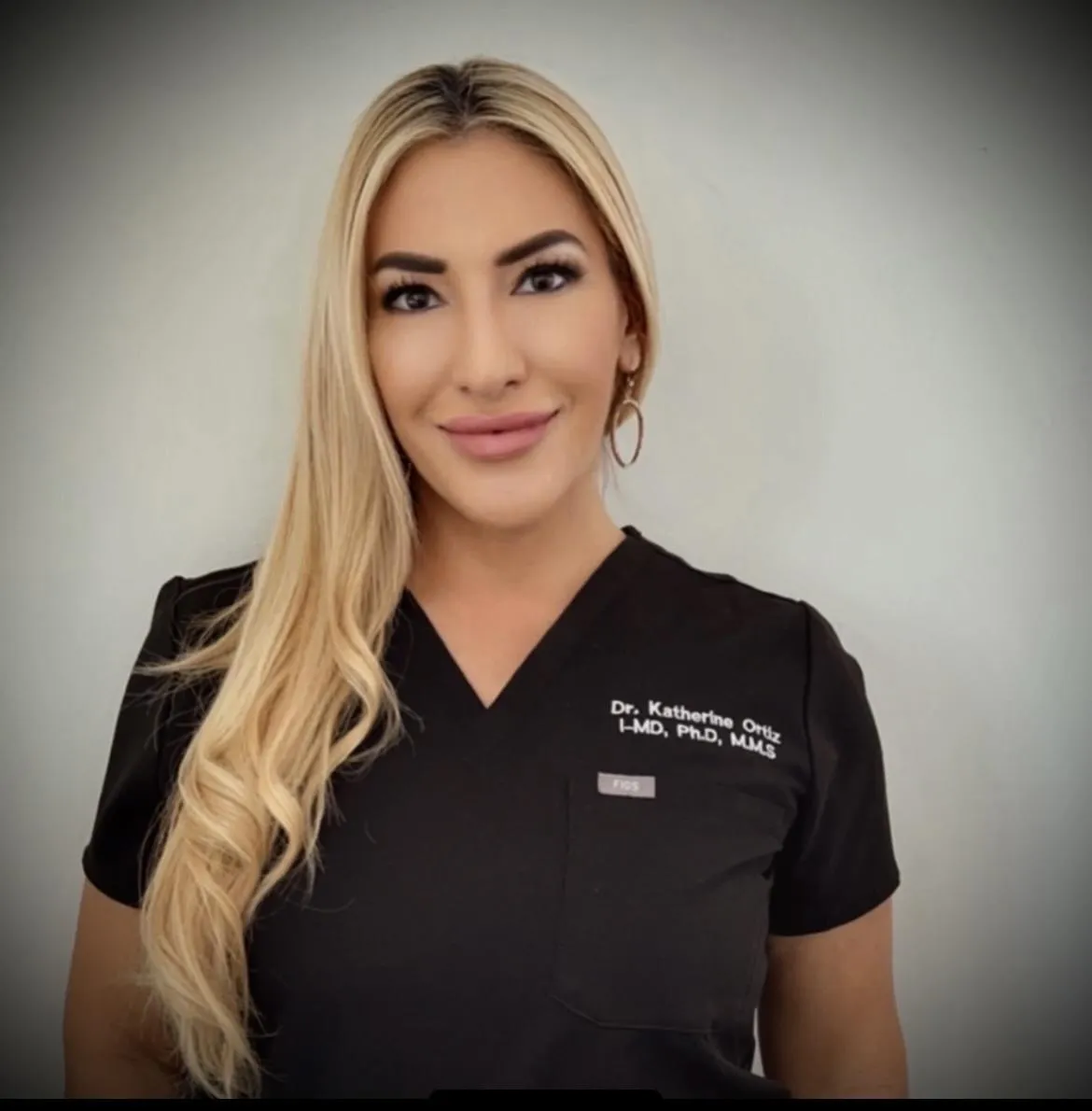
Meet Dr. Katherine Ortiz
Dr. Katherine Ortiz is the founder of DNA Wellness and Longevity Institute in Bonita Springs, FL. She is a board-certified Physician Associate and holds a Ph.D. in Integrative Medicine from Quantum University, with fellowship training through the American Academy of Anti-Aging Medicine (A4M) and the University of South Florida in functional and regenerative medicine.
Her practice is built on a foundational belief: that the body has an extraordinary capacity to heal and self-regulate when given the right support. Dr. Ortiz investigates root causes — hormonal imbalances, nutritional deficiencies, genetic factors — and builds individualized protocols designed to restore function and optimize long-term health.
Every protocol at DNA Wellness is ordered, reviewed, and monitored directly by Dr. Ortiz.
Ready to Address Your Metabolism at the Cellular Level?
Schedule a metabolic consultation with Dr. Katherine Ortiz at DNA Wellness and Longevity Institute in Bonita Springs. If insulin resistance, low energy, or age-related metabolic decline hasn't responded to diet and exercise alone, MOTS-C may be the missing piece — working at the mitochondrial level where most interventions don't reach.


