
Medical Aesthetics · Bonita Springs, Fl
SkinPen Microneedling in Bonita Springs, FL
FDA-Cleared Collagen Induction Therapy for Skin Texture, Scars, Wrinkles & Tightening
SkinPen® is the first and only FDA-cleared microneedling device — used at DNA Wellness and Longevity Institute in Bonita Springs under the supervision of Dr. Katherine Ortiz. By creating precise, controlled micro-channels in the skin's surface, SkinPen activates the body's natural wound-healing cascade — stimulating new collagen and elastin production that gradually transforms skin texture, reduces scarring, tightens laxity, and restores the skin quality that aging, sun damage, and acne have diminished. It can also be combined with PRP (platelet-rich plasma) for the Vampire Facial — delivering growth factors directly into the micro-channels at the moment of maximum absorption.
Why patients choose us
FDA-Approved
SkinPen® is the only FDA-cleared microneedling device on the market
All Skin Types
Safe and effective for Fitzpatrick skin types I–VI
SW Florida
Serving Bonita Springs, Naples, Estero & Fort Myers

What Is SkinPen Microneedling?
How Collagen Induction Therapy Works
Microneedling — clinically known as collagen induction therapy (CIT) — uses a device with fine, sterile needles to create thousands of controlled micro-injuries in the surface of the skin at precise, adjustable depths. These micro-channels are invisible to the naked eye and heal completely within days, but their biological effect is significant: the skin's wound-healing cascade is activated, recruiting growth factors, platelets, and fibroblasts to the treatment area. These repair mechanisms stimulate the production of new Type I and III collagen and elastin — the structural proteins responsible for skin firmness, elasticity, and texture — and trigger skin remodeling that progressively improves the appearance of scars, wrinkles, pores, and laxity over the weeks following treatment.
SkinPen® is the device DNA Wellness uses — and the distinction matters clinically. SkinPen® received FDA clearance in 2018 as the first microneedling device to meet the FDA's standards for safety and efficacy in the treatment of acne scars. FDA clearance requires clinical trial data demonstrating both safety and effectiveness; many of the microneedling pens used at spas and non-medical settings operate without this regulatory standard. SkinPen®'s adjustable needle depth (0.25–2.5mm) allows precise targeting of different skin concerns and skin layers — superficial channels for texture and tone, deeper channels for scars and significant laxity — giving trained providers the ability to customize each treatment to the patient's specific anatomy and goals.
The Vampire Facial — combining microneedling with topical platelet-rich plasma (PRP) — takes this further. PRP, concentrated from a small sample of the patient's own blood, is applied to the skin immediately after the microneedling pass. The micro-channels created by the SkinPen act as direct delivery pathways for PRP's growth factors (PDGF, VEGF, TGF-β, EGF) into the dermis — achieving concentrations and depths of penetration that topical application alone cannot reach. Dr. Ortiz's clinical team offers both standalone SkinPen microneedling and the combined Vampire Facial protocol depending on patient goals and skin condition.
How It Helps
What SkinPen Microneedling Can Improve
Acne Scars, Surgical Scars & Skin Damage
Acne scarring is the indication where microneedling's clinical evidence is strongest — it is the primary FDA-cleared indication for SkinPen® specifically. Atrophic acne scars (rolling, boxcar, and ice pick scars) form when the dermis is damaged and collagen production during healing is insufficient or disorganized. Microneedling disrupts the fibrotic scar tissue and triggers a new, organized collagen response — progressively filling and remodeling the depressed scar over a series of treatments. Clinical studies demonstrate meaningful improvement in acne scar severity scores across multiple skin types and ethnicities, making microneedling one of the most broadly applicable scar treatments available. Post-surgical scars and stretch marks also respond to collagen induction therapy, particularly when treatment begins once the wound has fully closed and initial healing is complete. Most scar patients complete 3–6 sessions for significant improvement, with results continuing to develop for 3–6 months after the final session.
Wrinkles, Skin Laxity & Anti-Aging
After age 20, collagen production declines by approximately 1% per year — a gradual loss that compounds into visible skin changes by the 30s and 40s: fine lines, reduced firmness, increased laxity, and skin that has lost the resilience it once had. Microneedling addresses this directly by triggering the skin to produce new collagen and elastin — not masking the signs of aging with filler volume but genuinely improving the biological quality of the dermis. Clinical evidence supports improvement in fine lines and wrinkles, skin firmness, skin texture, and pore appearance across multiple RCTs and systematic reviews. For patients who want to maintain the results of their biostimulatory injectables (Sculptra®, Radiesse®), regular microneedling sessions between injection appointments optimize skin surface quality in a way that biostimulators alone do not fully address. The two work synergistically — biostimulators rebuild deep structural collagen; microneedling refines the dermal surface.
Vampire Facial — Microneedling + PRP
The Vampire Facial combines SkinPen® microneedling with topical platelet-rich plasma (PRP) — concentrated from the patient's own blood — applied immediately after the microneedling pass while the micro-channels are open. This timing is the key clinical distinction: the growth factors in PRP (PDGF, VEGF, TGF-β, EGF, IGF-1) are delivered directly into the dermis through the micro-channels at concentrations and depths that topical products cannot penetrate through intact skin. PRP amplifies the collagen-stimulating and skin-remodeling effect of microneedling — producing faster and more pronounced improvements in skin texture, tone, glow, and scar appearance compared to microneedling alone. The Vampire Facial is distinct from the Vampire Facelift® (which involves injecting PRP and filler) — this procedure applies PRP topically to the treatment surface rather than through injection. Dr. Ortiz's team offers both options; the right approach depends on the patient's goals, skin condition, and whether injectable or topical PRP delivery better serves their clinical picture.
Your Journey
What to Expect at DNA Wellness
Step 01 — Skin Assessment & Treatment Planning Your consultation with Dr. Ortiz's team begins with a thorough skin assessment — evaluating your skin type (Fitzpatrick I–VI), concerns (scarring, wrinkles, laxity, texture, pores), skin condition (active acne, rosacea, sensitivity), and goals. Patients with active acne breakouts, open wounds, active rosacea, or herpes simplex in the treatment area are not appropriate candidates for microneedling at that time — the assessment identifies these contraindications clearly. Patients on isotretinoin (Accutane) or who have completed isotretinoin within the past 6 months require additional evaluation before proceeding. The appropriate needle depth, number of passes, and whether to combine with PRP are all determined at this consultation. For patients interested in the Vampire Facial, blood draw logistics and PRP processing time are incorporated into the appointment schedule.
Step 02 — The Treatment Session A topical numbing cream is applied to the treatment area and allowed to take full effect — typically 30–45 minutes — before the SkinPen® is applied to the skin. The microneedling pass takes approximately 20–40 minutes depending on the treatment area. You will feel a mild vibrating sensation and some pressure; most patients find the experience significantly more comfortable than anticipated once the numbing is fully effective. For the Vampire Facial, a small blood draw is performed before numbing is applied and processed during the numbing period, so PRP is ready immediately after the microneedling pass. Immediately following treatment the skin appears red and slightly flushed — similar to a moderate sunburn. You can return to normal activities within 24–48 hours; makeup can typically be applied after 24 hours. Full sun avoidance and SPF50+ for the first 5–7 days post-treatment is required.
Step 03 — Results Timeline & Treatment Plan Microneedling results develop progressively through the skin's natural collagen remodeling cycle. Most patients notice brighter, smoother skin within 5–7 days as the healing response resolves. Early collagen production begins at 2–4 weeks, producing improved texture and firmness. The most significant improvements — particularly in scars, wrinkles, and laxity — become visible at 4–12 weeks and continue developing through 3–6 months as collagen maturation completes. An initial series of 3–6 sessions spaced 4–6 weeks apart is recommended for meaningful, lasting improvement — single sessions produce visible results but do not achieve the cumulative collagen remodeling that a series delivers. Maintenance sessions every 3–6 months sustain the results and support ongoing skin quality as natural collagen decline continues with age.
Questions Answered
Frequently Asked Questions About SkinPen Microneedling
Q1: Why does DNA Wellness use SkinPen® specifically? SkinPen® is the first and only FDA-cleared microneedling device — cleared in 2018 with clinical trial data specifically for the treatment of acne scars in adults. FDA clearance requires demonstrating both safety and clinical effectiveness in controlled trials, a regulatory bar that most microneedling devices used in spa and non-medical settings have not met. The device's adjustable needle depth (0.25–2.5mm), single-use sterile needle cartridges, and consistent motor speed also offer clinical advantages over manual or less-regulated devices in terms of precision, sterility, and reproducibility of results. At DNA Wellness, every SkinPen® treatment is performed by a trained clinical provider under Dr. Ortiz's supervision — not a non-medical aesthetician.
Q2: What skin concerns does microneedling treat most effectively? Acne scarring is the indication with the strongest clinical evidence — it is the primary FDA-cleared indication for SkinPen® and produces consistent improvement across multiple skin types and ethnicities in controlled trials. Fine lines and wrinkles, particularly in the periorbital area, forehead, and around the mouth, also respond well to a series of treatments. Enlarged pores, uneven skin texture, and overall skin quality improvement are consistent outcomes. Skin laxity in the face, neck, and décolletage responds to microneedling as part of a broader skin rejuvenation protocol. Stretch marks and post-surgical scars respond variably — results depend on the age, depth, and type of scar. Hyperpigmentation and melasma require careful evaluation — microneedling can improve post-inflammatory hyperpigmentation in some patients but may worsen melasma in others depending on skin type and technique. Dr. Ortiz's team assesses each patient's specific concerns individually before recommending treatment.
Q3: What is the difference between the Vampire Facial and the Vampire Facelift®? These two procedures are frequently confused and the distinction matters clinically. The Vampire Facial combines microneedling with topical PRP — PRP concentrated from the patient's blood is applied to the skin surface immediately after microneedling, with the micro-channels acting as delivery pathways into the dermis. It addresses skin texture, tone, glow, and scar appearance at the surface level. The Vampire Facelift® is an injection-based procedure — PRP and hyaluronic acid filler are injected into the facial tissue to restore structural volume while simultaneously stimulating collagen regeneration at a deeper tissue level. The Vampire Facial is a skin quality treatment; the Vampire Facelift® is a facial volume and rejuvenation treatment. Some patients benefit from both at different times or in a combined protocol. Dr. Ortiz will clarify which is appropriate for your specific goals at consultation.
Q4: Is microneedling safe for darker skin tones? Yes — this is one of microneedling's genuine clinical advantages over many laser and energy-based skin treatments. Most fractional laser and intense pulsed light (IPL) treatments carry meaningful risk of post-inflammatory hyperpigmentation (PIH) and dyspigmentation in Fitzpatrick skin types IV, V, and VI — making them less appropriate for patients with darker skin tones. SkinPen® microneedling is safe across all Fitzpatrick skin types (I–VI), including patients of African, Hispanic, Asian, and Middle Eastern heritage, when used with appropriate settings and technique. The FDA clearance study for SkinPen® specifically included patients across multiple Fitzpatrick skin types. For patients with melasma or existing hyperpigmentation, a careful pre-treatment assessment and protocol adjustment is important — Dr. Ortiz's team evaluates this at consultation.
Q5: Is SkinPen microneedling available in Bonita Springs and Southwest Florida? Yes. DNA Wellness and Longevity Institute, located at 26800 S Tamiami Trail, Suite 380 in Bonita Springs, offers SkinPen® microneedling and the Vampire Facial (microneedling + PRP) for patients throughout Bonita Springs, Naples, Estero, Fort Myers, and surrounding Southwest Florida communities. Call (239) 250-7930 to schedule your consultation.
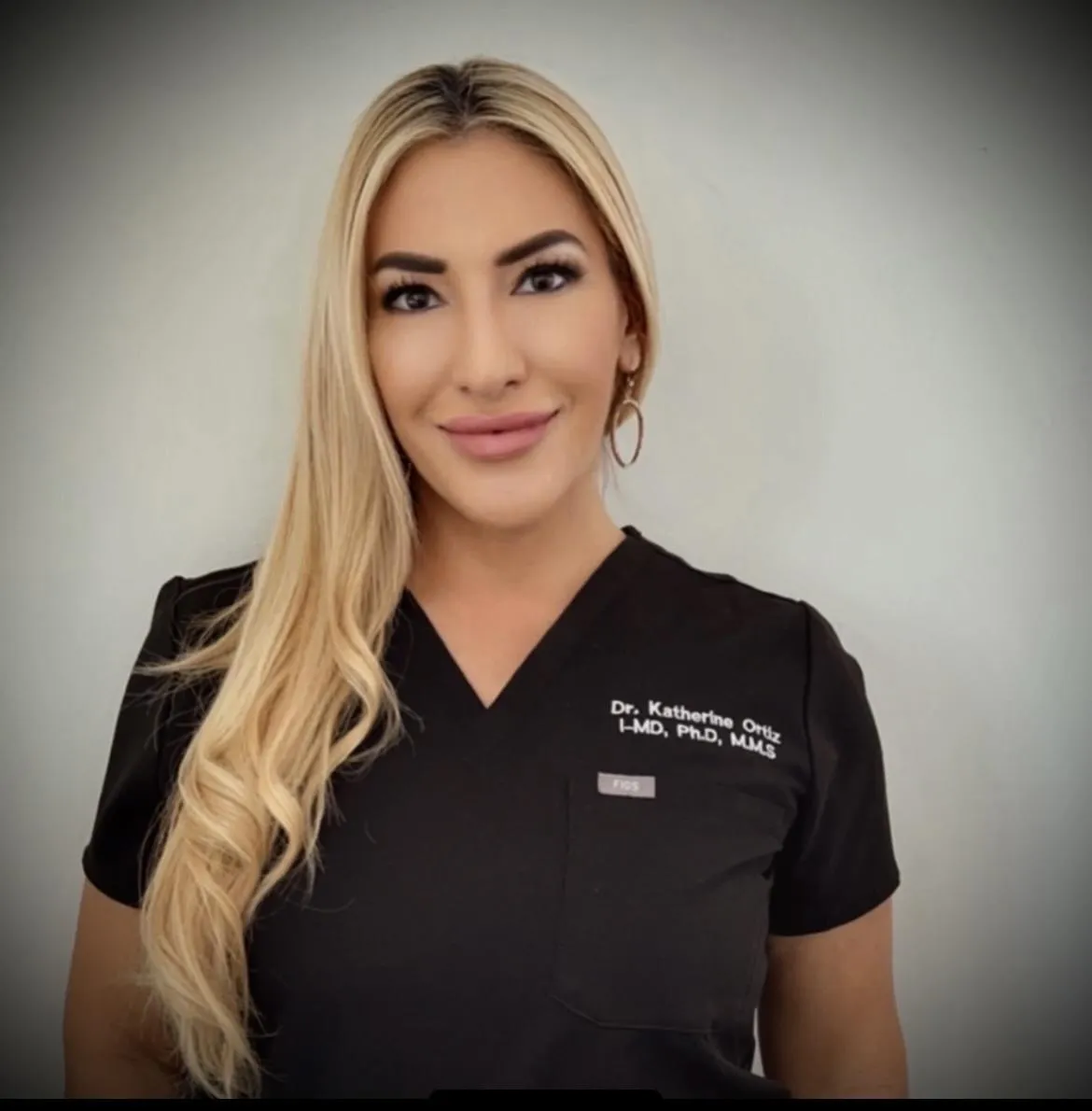
Meet Dr. Katherine Ortiz
Dr. Katherine Ortiz is the founder of DNA Wellness and Longevity Institute in Bonita Springs, FL. She is a board-certified Physician Associate and holds a Ph.D. in Integrative Medicine from Quantum University, with fellowship training through the American Academy of Anti-Aging Medicine (A4M) and the University of South Florida in functional and regenerative medicine.
Her practice is built on a foundational belief: that the body has an extraordinary capacity to heal and self-regulate when given the right support. Dr. Ortiz investigates root causes — hormonal imbalances, nutritional deficiencies, genetic factors — and builds individualized protocols designed to restore function and optimize long-term health.
Every protocol at DNA Wellness is ordered, reviewed, and monitored directly by Dr. Ortiz.


