
Men's Sexual Health · Bonita Springs, Fl
P-Shot® (PRP for Men) in Bonita Springs, FL
Physician-Supervised Regenerative PRP Therapy for Erectile Function & Male Sexual Wellness
The P-Shot® (Priapus Shot®) is a non-surgical procedure that uses platelet-rich plasma from your own blood to support erectile tissue health, penile vascular function, sensitivity, and — most meaningfully — the management of Peyronie's disease, where clinical evidence is strongest. Dr. Katherine Ortiz offers the P-Shot® at DNA Wellness and Longevity Institute in Bonita Springs as part of a comprehensive men's sexual health evaluation that also addresses the testosterone, cardiovascular, and metabolic factors that drive most cases of erectile dysfunction.
Why patients choose us
Physician-Led
All protocols supervised by
Dr. Katherine Ortiz I-MD, Ph.D., PA-C, M.M.S., ABAAHP
Your Own Biology
PRP uses concentrated growth factors from your own blood — no synthetics
SW Florida
Serving Bonita Springs, Naples, Estero & Fort Myers
Treatment Overview
PRP Therapy
Physician-Supervised
Your Own Blood — No Synthetics
No Surgery · No Downtime
Bonita Springs, FL
What Is the P-Shot®?
How PRP Supports Penile Tissue Health
The P-Shot® (Priapus Shot®) delivers platelet-rich plasma — concentrated from your own blood and rich in growth factors including VEGF, PDGF, TGF-β, and EGF — into the corpus cavernosum and surrounding penile tissue using a precise injection technique. When delivered into erectile tissue, these growth factors stimulate angiogenesis (new blood vessel formation), tissue regeneration, and cavernous nerve fiber repair — the biological mechanisms that underpin improved vascular function and sensitivity in the penis.
The clinical application where PRP evidence is most compelling is Peyronie's disease — a condition where scar tissue (plaque) forms in the tunica albuginea of the penis, causing curvature, penile shortening, and pain that can make intercourse difficult or impossible. A 2025 prospective study of 72 men with Peyronie's disease demonstrated that intralesional PRP injections reduced penile curvature and plaque buildup with a favorable safety profile. A separate 2025 single-center cohort study of 36 men with stable Peyronie's disease showed statistically significant reductions in curvature and plaque thickness, alongside improvement in IIEF-5 erectile function scores, after three weekly PRP injections.
For erectile dysfunction (ED), the evidence is more preliminary — a 2023 systematic review of seven studies showed improvement in sexual function in PRP-treated groups, and a randomized controlled trial demonstrated IIEF-5 improvements versus placebo — but current urology guidelines classify PRP as experimental for ED, and Dr. Ortiz is direct about this with every patient. PRP works best for ED in a specific clinical context: men with vascular or tissue-level contributors to their dysfunction who have not achieved adequate response with PDE5 inhibitors, or as part of a multimodal protocol alongside testosterone optimization, Alma Duo acoustic wave therapy, or PT-141. Understanding your specific pattern of ED is the prerequisite for knowing whether PRP is the right tool.
How It Helps
What the P-Shot® Can Address
Erectile Dysfunction — A Regenerative Complement Body
Peyronie's disease affects an estimated 3–9% of adult men, though it is significantly underreported due to embarrassment and lack of awareness. It is caused by the formation of fibrous scar tissue (plaque) within the tunica albuginea — the fibrous sheath surrounding the erectile chambers — typically following microtrauma to the erect penis. The plaque causes the penis to curve, shorten, or narrow during erection, often painfully, and can severely impair sexual function and self-confidence. PRP's anti-fibrotic and tissue-regenerative properties — through TGF-β modulation and collagen remodeling — make it a biologically rational treatment for Peyronie's: targeting the plaque itself rather than managing symptoms. The 2025 clinical evidence supporting PRP for Peyronie's is the strongest in the P-Shot® literature. For men in the stable phase of Peyronie's disease (curvature consistent for 6+ months), Dr. Ortiz evaluates PRP as part of a structured intervention plan.
Erectile Dysfunction — A Regenerative Complement Body
Erectile dysfunction has multiple contributing causes — vascular insufficiency, neurogenic factors, hormonal imbalance, metabolic disease, and psychological components — and no single treatment addresses all of them. For men whose ED has a vascular or tissue-level component and who have had limited response to PDE5 inhibitors (Viagra, Cialis), PRP's mechanism — stimulating angiogenesis and cavernous smooth muscle regeneration — provides a biologically distinct intervention that works upstream of what medications address. A randomized controlled trial demonstrated significant IIEF-5 score improvements in PRP-treated men versus placebo. Dr. Ortiz integrates P-Shot® for ED within a comprehensive evaluation: testosterone levels, cardiovascular health, and metabolic function are assessed alongside the penile tissue picture, because optimizing these systemic factors alongside PRP consistently produces better outcomes than PRP alone.
Sensitivity, Confidence & Overall Sexual Function Body
Beyond the specific indications of Peyronie's disease and ED, many men report meaningful improvements in penile sensitivity, quality of erection, and overall sexual confidence following the P-Shot®. PRP's stimulation of nerve tissue regeneration — through growth factor-driven neurotrophic effects — supports improved sensitivity in men whose sensation has diminished with age, following prostate procedures, or due to neuropathic contributors. For men already on testosterone optimization with Dr. Ortiz who are looking to address the penile tissue dimension of their sexual function alongside their hormonal protocol, the P-Shot® offers a targeted complement that addresses the local tissue environment that systemic hormone therapy cannot directly reach.
Your Journey
What To Expect with Dr Ortiz
Step 01 — Men's Sexual Health Consultation Your consultation with Dr. Ortiz is private, direct, and non-judgmental. She reviews your specific concerns — erectile function, penile curvature, sensitivity, prior treatments, and response to any medications you've tried — alongside a comprehensive assessment of contributing systemic factors: testosterone (total, free, and bioavailable), estradiol, SHBG, cardiovascular risk markers, blood sugar, and thyroid. Identifying and addressing these systemic contributors before or alongside PRP consistently produces better outcomes. Dr. Ortiz will be direct about what the P-Shot® can realistically achieve in your specific situation — Peyronie's disease candidates and men with vascular ED who have plateaued on medications are evaluated differently, and the treatment plan reflects that distinction.
Step 02 — The P-Shot® Procedure A small amount of blood is drawn and processed in a centrifuge for approximately 10 minutes. A topical numbing cream is applied to the penis and allowed to take full effect before any injection occurs — most men report the procedure as far more comfortable than anticipated. Dr. Ortiz delivers PRP into the corpus cavernosum and targeted areas using a precise injection technique. The full appointment takes approximately 45–60 minutes. You can return to normal daily activities immediately. Sexual activity is typically paused for 4–7 days to allow the initial tissue response to establish. For Peyronie's disease, a series of 3 weekly injections is the standard protocol; for ED and general sexual wellness applications, 1–2 sessions spaced 4–6 weeks apart is typical. Dr. Ortiz provides specific protocol guidance based on your indication.
Step 03 — Results Timeline & Follow-Up PRP's regenerative effects develop over time — results are not immediate. Men with Peyronie's disease typically begin to notice curvature changes and reduced penile pain within 4–6 weeks, with continued plaque remodeling through months 2–3. ED and sensitivity improvements are typically noticeable at 6–12 weeks as vascular and nerve changes develop. Dr. Ortiz schedules a follow-up at 8 weeks to assess your response and determine whether additional sessions or concurrent interventions are indicated. For men being managed for testosterone deficiency simultaneously, the follow-up also allows Dr. Ortiz to evaluate how the hormone and PRP protocols are working together. Results typically last 12–18 months; maintenance sessions sustain the tissue benefits over time.
Questions Answered
Frequently Asked Questions About the P-Shot® PRP for Men
Q1: How strong is the clinical evidence for the P-Shot®? The evidence base for the P-Shot® varies meaningfully by indication, and Dr. Ortiz is transparent about this at every consultation. For Peyronie's disease, the 2025 clinical literature is most supportive — multiple studies including a 72-patient prospective trial and a 36-patient cohort study demonstrated reductions in penile curvature and plaque thickness with a favorable safety profile. For erectile dysfunction, a 2023 systematic review of seven studies showed improvement in sexual function among PRP-treated men, and an RCT demonstrated IIEF-5 improvements versus placebo — but current European urology guidelines still classify PRP as experimental for ED, and Dr. Ortiz presents it as a promising regenerative option within a comprehensive protocol rather than a standalone proven ED treatment. Patients deserve accurate information to make informed decisions — not overclaiming.
Q2: How is the P-Shot® different from Viagra or Cialis? PDE5 inhibitors like Viagra and Cialis work by increasing blood flow to the penis at the time of sexual activity — they require you to take them in anticipation of intercourse and do not change the underlying tissue health of the penis over time. The P-Shot® works differently: it stimulates angiogenesis and tissue regeneration in the penile vasculature and nerve structures — addressing the biological substrate of erectile function rather than compensating for it temporarily. For men who respond well to PDE5 inhibitors, the P-Shot® is not necessarily an alternative but can be a complement — addressing the underlying tissue while medication handles the acute need. For men who don't respond to or cannot take PDE5 inhibitors, the P-Shot® addresses a mechanism those medications cannot reach. Dr. Ortiz evaluates which role PRP plays in your specific picture at consultation.
Q3: Is the P-Shot® appropriate for Peyronie's disease? Yes — and this is the indication where Dr. Ortiz is most confident in the clinical rationale for PRP. Peyronie's disease involves fibrotic plaque formation in the tunica albuginea; PRP's anti-fibrotic properties and collagen remodeling effects directly target this pathology. The 2025 clinical literature includes a 36-patient cohort study demonstrating significant reductions in curvature and plaque thickness after three weekly PRP injections, and a 72-patient study documenting curvature reduction with good tolerability. PRP is most appropriate for men in the stable phase of Peyronie's (curvature consistent for at least 6 months) as part of a structured intervention plan. Dr. Ortiz evaluates whether you are in the active or stable phase, the degree of curvature, and whether PRP is appropriate as a standalone or combined approach.
Q4: Can the P-Shot® be combined with testosterone therapy or Alma Duo? Yes — and for most men, the best outcomes come from addressing the penile tissue alongside the systemic factors driving sexual dysfunction. If testosterone deficiency is contributing to ED or Peyronie's, optimizing testosterone alongside the P-Shot® addresses both the hormonal and the tissue dimensions simultaneously. The Alma Duo for Men — low-intensity acoustic wave therapy available at DNA Wellness — works through a complementary mechanism (promoting angiogenesis and tissue remodeling through acoustic energy) and pairs well with the P-Shot® for comprehensive vascular ED management. PT-141 (Bremelanotide), which works through the brain's arousal pathways, addresses the desire component that PRP and Alma Duo do not directly reach. Dr. Ortiz discusses the appropriate multimodal protocol for your specific pattern at consultation.
Q5: Is the P-Shot® available in Bonita Springs and Southwest Florida? Yes. Dr. Katherine Ortiz offers the P-Shot® PRP for Men at DNA Wellness and Longevity Institute, located at 26800 S Tamiami Trail, Suite 380 in Bonita Springs. All consultations and procedures are conducted with complete confidentiality. The clinic serves patients throughout Bonita Springs, Naples, Estero, Fort Myers, and surrounding Southwest Florida communities. Call (239) 250-7930 to schedule your private consultation.
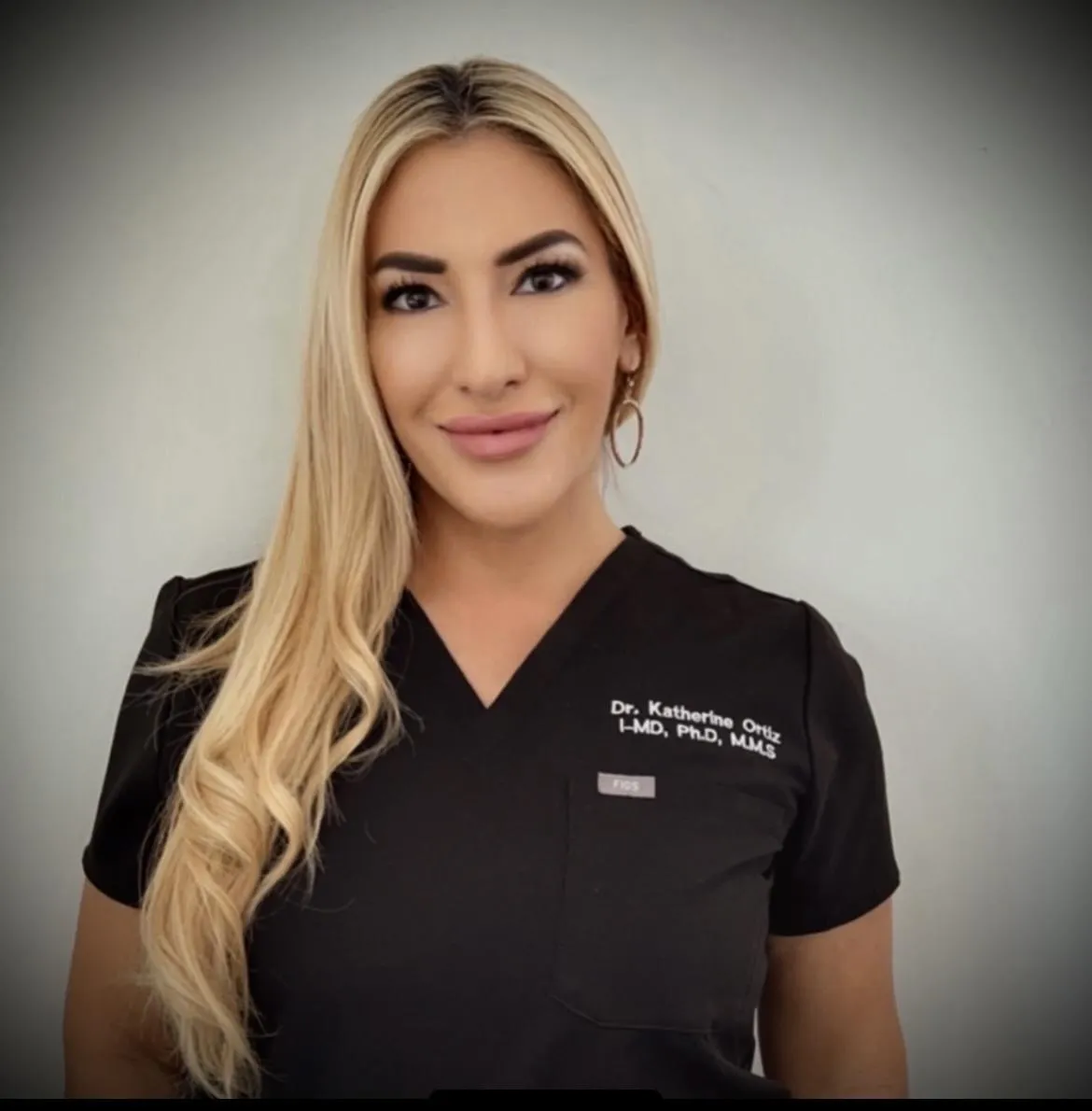
Meet Dr. Katherine Ortiz
Dr. Katherine Ortiz is the founder of DNA Wellness and Longevity Institute in Bonita Springs, FL. She is a board-certified Physician Associate and holds a Ph.D. in Integrative Medicine from Quantum University, with fellowship training through the American Academy of Anti-Aging Medicine (A4M) and the University of South Florida in functional and regenerative medicine.
Her practice is built on a foundational belief: that the body has an extraordinary capacity to heal and self-regulate when given the right support. Dr. Ortiz investigates root causes — hormonal imbalances, nutritional deficiencies, genetic factors — and builds individualized protocols designed to restore function and optimize long-term health.
Every protocol at DNA Wellness is ordered, reviewed, and monitored directly by Dr. Ortiz.


