
Peptide Therapy · Bonita Springs, Fl
TB-500 Peptide Therapy in Bonita Springs, FL
Physician-Supervised Systemic Tissue Repair & Regenerative Recovery
TB-500 is a synthetic peptide derived from Thymosin Beta-4 — a naturally occurring protein found in virtually every cell in the human body — prescribed by Dr. Katherine Ortiz at DNA Wellness and Longevity Institute. Unlike peptides that act locally at a single injury site, TB-500 distributes systemically through the body, supporting cell migration, new blood vessel formation, and tissue repair across muscles, tendons, ligaments, joints, and connective tissue. It is most commonly used for recovery from musculoskeletal injury, post-surgical healing, and chronic tissue inflammation that hasn't responded to conventional treatment.
Why patients choose us
Physician-Led
All protocols supervised by
Dr. Katherine Ortiz I-MD, Ph.D., PA-C, M.M.S., ABAAHP
Systemic Reach
Distributes throughout the body — not limited to one injury site
SW Florida
Serving Bonita Springs, Naples, Estero & Fort Myers
Treatment Overview
TB-500 Therapy
Physician-Supervised
Derived from Natural Thymosin Beta-4
Systemic Distribution
Bonita Springs, FL
What Is TB-500?
How TB-500 Peptide Therapy Works
As part of our Peptide Therapy in Bonita Springs program, Thymosin Beta-4 (Tβ4) is a 43-amino acid peptide naturally present in nearly every cell in the human body, found in particularly high concentrations in platelets and wound fluid — where it is released as part of the body's immediate response to injury. TB-500 is a synthetic version of the most therapeutically active fragment of this protein, engineered to be administered externally to amplify those same repair and regeneration signals on demand.
TB-500's primary mechanism operates through actin regulation. Actin is the structural protein responsible for cell shape, movement, and division. By sequestering G-actin and upregulating the cell-surface receptor that promotes cell migration, TB-500 enables faster movement of repair cells to damaged tissue — including fibroblasts (which produce collagen and connective tissue), endothelial cells (which form new blood vessels), and stem and progenitor cells that regenerate tissue. Simultaneously, TB-500 promotes angiogenesis — the formation of new blood vessels — which is essential for delivering oxygen and nutrients to healing areas. It also modulates the inflammatory response by reducing pro-inflammatory cytokines and limiting macrophage infiltration, helping tissue heal with less fibrosis and scarring.
What sets TB-500 apart from most peptides is its systemic distribution. Rather than staying near the injection site, TB-500 circulates broadly through the body, allowing it to support healing across multiple tissue types simultaneously — a clinically meaningful distinction for patients managing overlapping injuries or chronic systemic tissue stress. Dr. Ortiz evaluates TB-500 candidacy through a full clinical assessment and, where appropriate, integrates it with complementary regenerative therapies including BPC-157, PRP, and IV nutrient protocols available at DNA Wellness.
How It Helps
Potential Benefits of TB-500 Therapy
Musculoskeletal Injury Recovery
TB-500 is most widely used in regenerative medicine for the support of musculoskeletal injury recovery — including muscle strains, tendon injuries (Achilles tendinopathy, patellar tendinitis, tennis elbow), ligament sprains and partial tears, and chronic joint stress from overuse or age-related degeneration. By promoting fibroblast migration, collagen synthesis, and angiogenesis at injury sites, TB-500 supports the biological environment that allows damaged connective tissue to repair and remodel. Preclinical studies in animal models have demonstrated faster tendon healing, reduced scarring, and improved structural integrity in repaired tissue. For patients whose musculoskeletal injuries have been slow to resolve with physical therapy, rest, or conventional treatment, TB-500 addresses the underlying repair biology rather than managing symptoms alone.
Post-Surgical Healing & Tissue Regeneration
The same mechanisms that support injury recovery make TB-500 relevant in the post-surgical setting — particularly orthopedic procedures involving tendons, ligaments, and joint structures. By mobilizing repair cells and supporting new vascularization in healing tissue, TB-500 may support faster rehabilitation milestones and improved tissue quality during recovery. It also reduces pro-inflammatory signaling that, when prolonged, contributes to excessive scar formation and fibrosis. Dr. Ortiz evaluates TB-500 as part of a broader post-surgical recovery protocol, often in combination with BPC-157 for complementary local and systemic healing support, and may integrate PRP therapy available at the clinic for additional regenerative benefit.
Chronic Inflammation & Systemic Tissue Stress
For patients managing chronic inflammatory conditions that affect connective tissue — including arthritis, tendinopathy, and systemic inflammation driven by lifestyle, hormonal imbalance, or metabolic dysfunction — TB-500's anti-inflammatory and tissue-repair properties make it a meaningful intervention. Because it distributes systemically rather than acting locally, a single protocol can support multiple tissues simultaneously, which is clinically valuable for patients with generalized tissue stress. TB-500 has also been explored for its potential cardiovascular and neuroprotective applications in preclinical research, though these remain emerging areas. Dr. Ortiz contextualizes these applications within each patient's specific clinical picture.
Your Journey
What To Expect with Dr Ortiz
Step 01 — Clinical Assessment & Injury History Your first appointment with Dr. Ortiz includes a thorough musculoskeletal and health history review — the specific injury or tissue concern, how long it has persisted, what treatments have been tried, current medications, and any relevant imaging or prior lab work. For post-surgical candidates, the timing of the consultation relative to surgery matters: Dr. Ortiz evaluates the stage of healing and determines whether TB-500 is appropriate to initiate, and when. A comprehensive approach is especially important because TB-500 is most effective as part of a broader regenerative protocol rather than as a standalone intervention.
Step 02 — Personalized Protocol & Administration TB-500 is administered as a subcutaneous injection, typically 2–3 times per week during an initial loading phase, followed by a reduced maintenance frequency as healing progresses. Dr. Ortiz designs your protocol based on injury type, acuity, and your overall health picture. Prescriptions are sourced through licensed U.S. compounding pharmacies. For patients where the injury has both a localized component and systemic inflammatory burden, Dr. Ortiz frequently combines TB-500 with BPC-157 — which provides targeted local tissue support that complements TB-500's systemic reach. This combination is sometimes referred to in patient communities as the "Wolverine Stack" for its well-known regenerative synergy.
Step 03 — Progress Evaluation & Protocol Adjustment Most patients report meaningful improvements in pain, mobility, and tissue comfort within 2–4 weeks of consistent therapy. Full structural tissue healing — particularly in tendons and ligaments — takes longer, typically 8–16 weeks depending on injury severity. Dr. Ortiz schedules follow-up appointments to assess your response, adjust dosing or frequency, and determine when to transition from a loading protocol to maintenance. Where appropriate, she integrates TB-500 with other regenerative services available at DNA Wellness including PRP therapy, IV nutrient therapy, and hormone optimization that supports the tissue healing environment systemically.
Questions Answered
Frequently Asked Questions About TB-500 Therapy
Q1: What is the difference between TB-500 and BPC-157? TB-500 and BPC-157 are both used in regenerative and recovery protocols, but they operate through different mechanisms and have different primary strengths. BPC-157 (Body Protection Compound) is primarily a localized healing peptide — it signals fibroblasts and promotes collagen synthesis at specific injury sites, and has well-studied gut mucosal healing properties. TB-500 works systemically — it circulates broadly through the body, mobilizing repair cells and supporting new blood vessel formation across multiple tissue types simultaneously. For injuries with both a localized component and systemic inflammatory burden, the two work synergistically. Dr. Ortiz evaluates which is more appropriate — or whether both are indicated — based on your specific injury, its location, its acuity, and your overall health context.
Q2: What conditions is TB-500 most commonly used for? At DNA Wellness, Dr. Ortiz most commonly evaluates TB-500 for: tendon injuries including Achilles tendinopathy, patellar tendinitis, and lateral epicondylitis (tennis elbow); ligament sprains and partial tears including chronic ankle instability and partial ACL or MCL injuries; muscle strains and chronic overuse patterns in active adults; post-surgical recovery following orthopedic procedures; and chronic systemic inflammation affecting connective tissue, joints, and mobility. It is also considered as part of recovery protocols following acute injury where conventional treatment has plateaued.
Q3: How strong is the clinical evidence for TB-500? This is an important question and one Dr. Ortiz addresses honestly with every patient. Most of the published evidence for TB-500 comes from preclinical animal models — rodent studies of tendon, muscle, and cardiac injury — and from Phase II human clinical trials of the parent compound Thymosin Beta-4 (not TB-500 specifically) for wound healing applications including pressure ulcers and epidermolysis bullosa. Large-scale randomized controlled trials in humans for musculoskeletal applications remain limited. The mechanistic rationale is sound, the preclinical data is compelling, and patient and clinician experience in regenerative medicine settings is growing — but TB-500 is properly characterized as a promising research-stage therapy rather than a fully established one. Dr. Ortiz discusses this evidence landscape transparently so every patient can make an informed decision.
Q4: Can TB-500 be used alongside other treatments? Yes — and it is most effective when integrated into a broader regenerative approach rather than used in isolation. At DNA Wellness, TB-500 is frequently combined with BPC-157 for complementary local and systemic healing support. It may also be used alongside PRP therapy available at the clinic, IV nutrient therapy to support the systemic healing environment, and hormone optimization where relevant (growth hormone signaling plays an important supporting role in connective tissue repair). Physical therapy and appropriate rehabilitative activity remain essential — TB-500 supports the biological environment for healing, but structural rehabilitation still requires mechanical loading and movement.
Q5: Is TB-500 therapy available in Bonita Springs and Southwest Florida? Yes. DNA Wellness and Longevity Institute, located at 26800 S Tamiami Trail, Suite 380 in Bonita Springs, offers physician-supervised TB-500 therapy for patients throughout Bonita Springs, Naples, Estero, Fort Myers, and surrounding Southwest Florida communities. Call (239) 250-7930 to schedule your consultation with Dr. Ortiz.
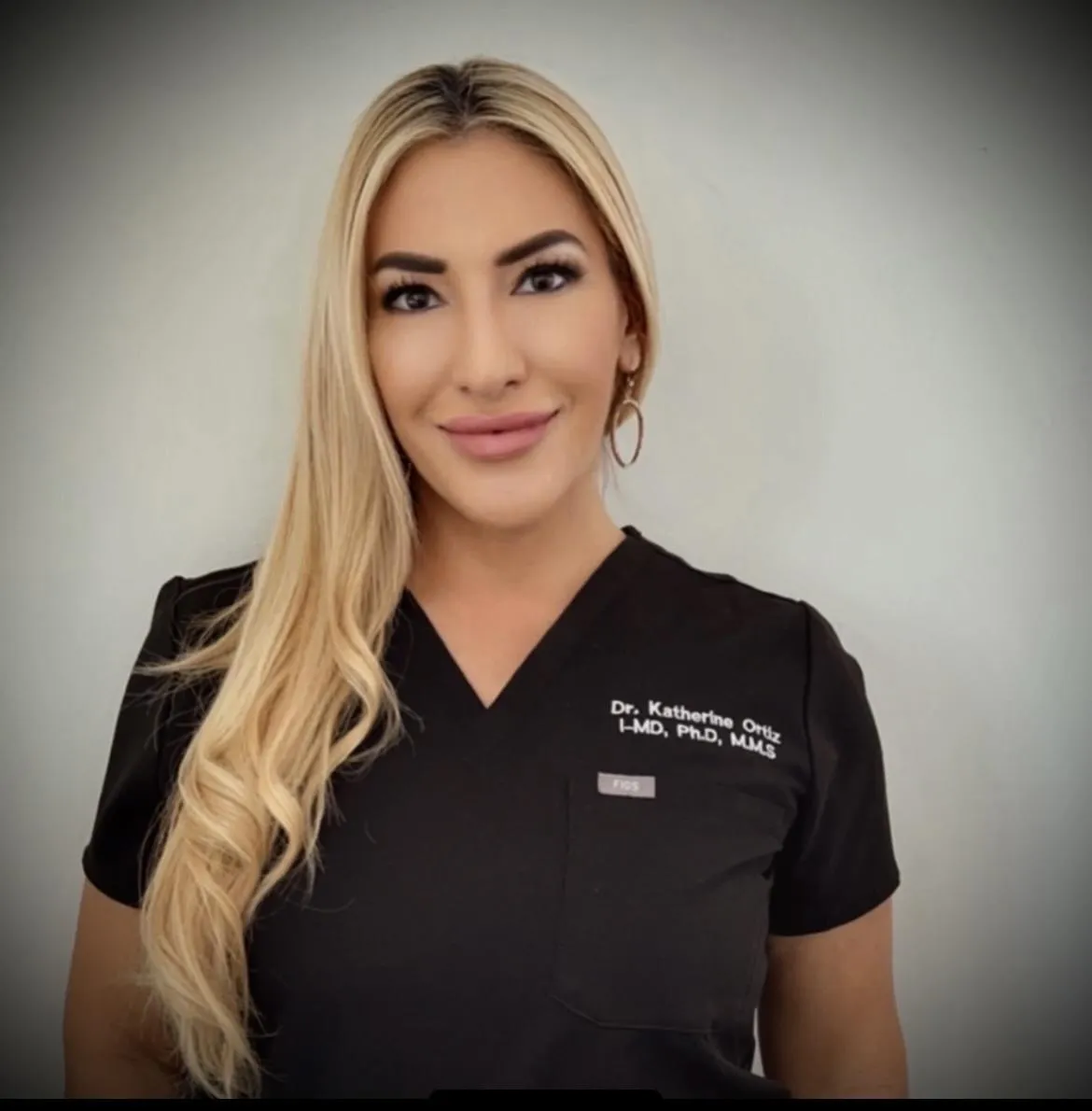
Meet Dr. Katherine Ortiz
Dr. Katherine Ortiz is the founder of DNA Wellness and Longevity Institute in Bonita Springs, FL. She is a board-certified Physician Associate and holds a Ph.D. in Integrative Medicine from Quantum University, with fellowship training through the American Academy of Anti-Aging Medicine (A4M) and the University of South Florida in functional and regenerative medicine.
Her practice is built on a foundational belief: that the body has an extraordinary capacity to heal and self-regulate when given the right support. Dr. Ortiz investigates root causes — hormonal imbalances, nutritional deficiencies, genetic factors — and builds individualized protocols designed to restore function and optimize long-term health.
Every protocol at DNA Wellness is ordered, reviewed, and monitored directly by Dr. Ortiz.
Ready to Support Your Body's Recovery at the Cellular Level?
Schedule a consultation with Dr. Katherine Ortiz at DNA Wellness and Longevity Institute in Bonita Springs. Whether you are recovering from an injury, preparing for or healing from surgery, or managing chronic tissue pain that hasn't resolved, Dr. Ortiz will evaluate whether TB-500 belongs in your recovery protocol — and what it should be combined with for maximum benefit.


